
Building an Addition in Metro Vancouver? Electrical Requirements City by City
Building an Addition in Metro Vancouver? Electrical Requirements City by City
Who issues your electrical permit, why the same addition costs more in Vancouver than in Burnaby, and the load calculation that decides your budget before a single stud goes up.

A homeowner in Port Moody phoned us in a genuine panic last spring. Beautiful two-storey addition off the back, framing up, drywall booked. He'd pulled his building permit from the city without trouble and assumed the electrical inspection came from the same counter. It doesn't — Port Moody's electrical goes to the province. He'd never opened a file. The work itself was fine; the calendar was not.
Additions are where Metro Vancouver's split permit system does the most damage, because an addition is one project that touches two permit streams and one very busy utility. Here's how it actually works, city by city, and where the money hides.
01What's the same everywhere
Let's clear the ground first, because it makes the comparison useful. The BC Building Code and the BC Electrical Code are provincial. They apply in Squamish and they apply in Surrey and they don't soften because your city is small.
So wherever your addition is going up, expect all of this:
- An electrical permit. New circuits in new square footage always need one. The question is who issues it, not whether.
- A load calculation proving the existing service can carry the new load. This is the gate everything else swings on.
- Arc-fault protection on the new branch circuits. In Canada this is not a bedrooms-only rule — the Canadian Electrical Code (Rule 26-724(f)) requires AFCI on essentially every 125 V receptacle circuit rated 20 A or less in a dwelling unit, with a short list of exceptions such as a dedicated refrigerator outlet and a sump pump receptacle. Plus GFCI protection in kitchens, baths and exterior locations in the new work.
- Tamper-resistant receptacles throughout the new construction.
- Hardwired smoke alarms with battery backup, interconnected, plus CO alarms where there's a fuel-burning appliance or attached garage.
- Rough-in inspection before you close the walls. Non-negotiable, everywhere, no exceptions worth discussing.
What changes between cities is the paperwork around all of that, whether your municipality has its own EV-ready bylaw, and — in one city — how far back into your existing house the requirements reach.
02Who issues your electrical permit: city by city
Under BC's Safety Standards Act, some municipalities run their own electrical inspection programs and the province handles the rest. Here's the split across our service area.
| City | Building permit | Electrical permit & inspection |
|---|---|---|
| Vancouver | City | City — own Electrical By-law |
| Burnaby | City | City |
| Surrey | City | City |
| City of North Vancouver | City | City |
| District of North Vancouver | District | District |
| West Vancouver | District | District |
| Maple Ridge | City | City |
| Coquitlam | City | Technical Safety BC |
| Port Coquitlam | City | Technical Safety BC |
| Port Moody | City | Technical Safety BC |
| New Westminster | City | Technical Safety BC |
| Richmond | City | Technical Safety BC (city issues gas) |
| Delta | City | Technical Safety BC |
| Squamish | District | Technical Safety BC |
| Whistler | Resort Municipality | Technical Safety BC |
Seven self-permitting, eight through the province. Richmond's the one that trips people: it's delegated for gas and issues its own gas permits, but electrical still goes to Technical Safety BC. We go through this in more depth in our city-by-city electrical permits guide and our explainer on why permits differ across Metro Vancouver.
EV-ready rules are a separate patchwork — and they're municipal too
Worth flagging here rather than in the code section, because people get this backwards constantly. There is no province-wide EV-ready requirement in the BC Building Code. What exists instead is a patchwork of local bylaws: roughly 33 local governments, covering something like 79% of BC's population, have adopted their own EV-readiness requirements. Clean Energy Canada published a roadmap in January 2026 pushing the province to adopt a single standard, precisely because there isn't one yet.
So the trigger, the number of parking spaces that must be served, and the capacity required all vary by municipality — and they don't line up with the permit split above. A city that sends your electrical to the province may still have a stricter EV-ready bylaw than one that doesn't. Confirm it with your municipality at design stage. Running a feed to a parking space while the walls are open costs a fraction of retrofitting one later, which is the whole argument for sorting it early. Our EV charger installation page covers the capacity side.
03Vancouver: the upgrade trigger that makes additions cost more
This is the single biggest difference in this article, and almost nobody writing about additions mentions it.
Everywhere else in Metro Vancouver, the general principle on an addition is that the new work meets current code while the existing house is largely left alone. Add a bedroom, and that new bedroom needs its alarm and its arc-fault protection. The bedrooms that were already there generally don't have to be brought up to today's standard.
Vancouver writes its own Building By-law, and Section 11.5 of that by-law is an upgrade mechanism. In the unofficial wording effective 15 September 2025, an alteration or addition to a single detached house or duplex containing not more than two principal dwelling units must comply with the by-law and the existing portions of the building shall be upgraded to an acceptable level, determined by tables in that section — with smoke alarms to be installed in conformance with the by-law's alarm subsections.
Read that as a budget line. In Vancouver, an addition can reach backwards into the house you already own. How far it reaches depends on the tables and on your specific scope, which is exactly why you confirm this with the city at intake rather than after framing. The by-law text is published on the City of Vancouver site.
Two practical consequences. Budget a contingency for existing-house work on any Vancouver addition — most commonly whole-house alarm upgrades. And if your house has knob-and-tube or aluminum branch wiring, get it assessed before you design, because an addition is precisely the moment that stops being a someday problem.
04The other self-permitting cities
Burnaby, Surrey, the City and District of North Vancouver, West Vancouver and Maple Ridge all issue their own electrical permits and send their own inspectors. From a coordination standpoint this is the easy version: one authority, one office, one set of contact details, and a building inspector and an electrical inspector who work for the same employer.
It matters more than it sounds when you're trying to land a rough-in inspection between framing and drywall. Two inspections in the same queue can usually be sequenced in the same week. Two inspections in different queues cannot be relied on to.
The wrinkle in these cities isn't process, it's housing stock. North Burnaby around Capitol Hill, the older parts of North Vancouver and West Vancouver, and pockets of Surrey and Maple Ridge are full of homes old enough that opening a wall for an addition reveals something. Our guide to electrical red flags by neighbourhood covers what tends to turn up where.
05The Technical Safety BC cities: two authorities, one project
In Coquitlam, Port Coquitlam, Port Moody, New Westminster, Richmond, Delta, Squamish and Whistler, your building permit comes from the municipality and your electrical permit comes from the province.
Nothing about that is hard. It's just that it's two queues, two bookings, and no single office that can tell you where everything stands. Which is how our Port Moody homeowner ended up with a framed addition and no electrical file. Build it into the schedule from day one and it's a non-event.

One planning note that saves grief: open the electrical file early, not when you're ready for inspection. Booking a provincial inspection is not a same-afternoon proposition in construction season.
06The load calculation and the BC Hydro long pole
Here's where additions actually get expensive, and it has nothing to do with which city you're in.
An addition adds square footage, and square footage adds circuits — lighting, receptacles, often a bathroom, sometimes a kitchenette, usually heating for the new space. Then people bolt a heat pump or an EV charger onto the same project because the walls are open anyway. On a 1970s house sitting on a 100-amp service with a panel already full of tandem breakers, that arithmetic fails early.
Two outcomes. Either the existing service holds and you add a sub-panel to feed the addition — often the tidiest answer, and we've written about when a sub-panel makes sense. Or you need a service and panel upgrade, which in our experience lands in the $3,000 to $6,000 range in Metro Vancouver depending on service size, meter base condition and how the utility connection is configured. Our breakdown of a 100 to 200 amp service upgrade covers that decision.
And the scheduling reality: any change at the service entrance means BC Hydro has to be involved. Utility coordination is routinely the longest single item on an addition's electrical schedule — longer than the permit, longer than the work. Start it early.
07What an addition triggers for smoke and CO alarms
People assume alarms are a small line item. On an addition they're often the item that reaches furthest into the existing house.
The general shape outside Vancouver: new bedrooms and new hallways in the addition need alarms meeting current requirements — hardwired, battery backup, interconnected. Existing bedrooms generally don't need retrofitting, though every electrician you'll meet will tell you to do it anyway. If your addition's floor levels match the existing ones, an existing alarm on that storey can sometimes satisfy the storey requirement; a new bedroom or hallway cannot be covered that way.
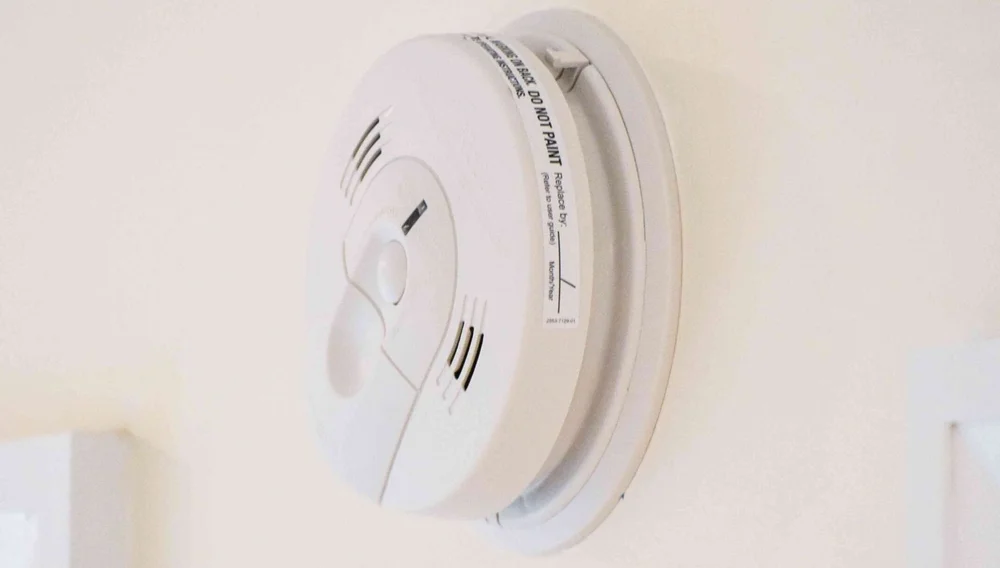
In Vancouver, the upgrade mechanism can push this further — alarms across the whole house rather than just the new part. Confirm the scope at intake. Either way, settle the interconnection approach before drawings are final: pulling interconnect cable through finished ceilings is miserable, expensive work, and listed wireless interconnect isn't accepted in every scenario. Our smoke detector installation page covers the device and wiring side.
CO alarms are required where there's a fuel-burning appliance or an attached garage. If your addition includes a garage, or the furnace serving it burns gas, that's you.
08Rough-in checklist: settle these before drywall
- Load calculation done and accepted, with the sub-panel versus service-upgrade decision made rather than deferred.
- BC Hydro engaged if the service entrance is changing. Earliest possible.
- Electrical file open with the right authority — city in the seven self-permitting municipalities, Technical Safety BC in the other eight.
- In Vancouver: existing-house upgrade scope confirmed with the city, in writing, before framing closes.
- Alarm interconnection strategy fixed and drawn, covering both new and existing areas as required.
- Arc-fault and GFCI coverage mapped across the new work.
- Panel directory updated as you go, not reconstructed from memory later. Here's why that matters.
- Rough-in inspection booked with realistic lead time for the authority you're actually dealing with.
If the existing wiring looks questionable where the addition ties in, that's the moment for thermal imaging or a proper assessment — not after the drywallers have been.
09What it costs, and what actually goes wrong
Electrical on a straightforward addition — circuits, devices, alarms, permit and inspections — generally runs a few thousand dollars, with the service upgrade as the swing factor that can double it, and Vancouver's existing-house upgrade requirements as a second swing factor on top. Every house is different and every quote is site-specific. Treat those as planning brackets, and read our post on what homeowners actually pay for electrical permits in BC for the permit side.
What goes wrong is almost never the wiring:
- Assuming one permit office. In eight of our fifteen municipalities, it isn't.
- Discovering Vancouver's upgrade mechanism after framing. Confirm scope at intake.
- Leaving BC Hydro until last. It's the longest item, not the final formality.
- Skipping the load calculation and finding out at rough-in that the service can't carry the addition.
- Deciding alarms late and retrofitting interconnect through finished ceilings.
- Wiring without a permit. It surfaces at sale, gives an insurer grounds to deny a claim, and correcting it means opening walls you just paid to close. Our insurance inspection page covers what that day looks like.
And the honest note: if your addition is small, your service is 200 amps with a modern breaker panel, and your alarms are already hardwired and interconnected, this is a straightforward job. Not every addition needs a service upgrade. Have someone do the load calculation before you assume it does — that's a short visit, not a project.
Planning an addition? Start with the load calculation.
Kato Electrical is a licensed and insured Vancouver electrician serving the Lower Mainland from Squamish to Maple Ridge. We handle addition electrical end to end — load calculation, permits with the right authority, BC Hydro coordination, rough-in, alarms and final inspection — and we'll tell you early if your service won't carry it.
Call (604) 330-5854 Book an assessment10Frequently asked questions
Do I need an electrical permit for a home addition in Metro Vancouver?
Yes. New circuits in new square footage always require an electrical permit. The question is who issues it. Vancouver, Burnaby, Surrey, the City of North Vancouver, the District of North Vancouver, West Vancouver and Maple Ridge issue their own electrical permits and send their own inspectors. In Coquitlam, Port Coquitlam, Port Moody, New Westminster, Richmond, Delta, Squamish and Whistler, the electrical permit comes from Technical Safety BC even though your building permit comes from the city.
Why does an addition cost more in Vancouver than in a neighbouring city?
Because Vancouver writes its own Building By-law, and Section 11.5 of that by-law contains an upgrade mechanism. In the wording effective 15 September 2025, an alteration or addition to a single detached house or duplex must comply with the by-law and the existing portions of the building must also be upgraded to a level determined by tables in that section, including smoke alarm requirements. Elsewhere in Metro Vancouver the new work must meet current code while existing areas are generally left alone. Confirm your specific scope with the city at intake, because the tables and your project determine how far the requirement reaches.
Will my addition require an electrical service upgrade?
Often, but not always. It depends on the load calculation, which weighs your new circuits against your existing service capacity. Additions on 60 or 100 amp services frequently do need an upgrade, especially where a heat pump, EV charger or new bathroom is part of the scope. Homes already on 200 amp service with room in the panel frequently do not. Get the load calculation done before you budget for an upgrade — it is a short assessment, not a project, and it can save you several thousand dollars.
Do I have to upgrade the smoke alarms in my existing house when I build an addition?
Outside Vancouver, generally no. New bedrooms and hallways in the addition need hardwired, interconnected alarms with battery backup meeting current requirements, while existing bedrooms are usually not required to be retrofitted, though it is strongly recommended. In Vancouver the by-law's upgrade mechanism can require alarms throughout the existing house as well. Settle the interconnection strategy before drawings are finalized, because retrofitting interconnect through finished ceilings is expensive.
How long does BC Hydro coordination add to an addition timeline?
Any change at the service entrance requires BC Hydro involvement, and in our experience utility coordination is routinely the longest single item on an addition's electrical schedule — often longer than permitting or the physical work. Start it as early as possible rather than treating it as a final formality. If your addition does not touch the service entrance, this does not apply to you.
Can I get my building permit and electrical permit at the same time?
In the seven self-permitting municipalities, both come from the same city office, so they can usually be coordinated together. In the eight Technical Safety BC municipalities, they are separate files with separate authorities and separate inspection queues, and neither office can tell you the status of the other. Note that Surrey has its own sequencing rules for certain scopes, so confirm the order with the city before assuming permits can run in parallel.
What happens if my addition was wired without a permit?
Three consequences matter more than any fine. An insurer can deny a claim that traces back to unpermitted work. The work surfaces during a home inspection and becomes a negotiating point at sale. And bringing it into compliance requires a retroactive permit and inspection, which — because an inspector has to see the work — can mean opening walls you have already paid to finish and decorate. Permitting at the start is consistently cheaper.
- City of Vancouver — Vancouver Building By-law, Section 11.5 upgrade mechanism
- Technical Safety BC
- BC Building Code (BC Publications)
- BC Laws — Safety Standards Act
- BC Hydro
Municipal bylaws, fees and processes change. Confirm current requirements with the relevant authority before relying on them.