

Smart Home Automation
Done Right, Not Just Done
Anyone can walk you through a Lutron app. We’re the ones who make sure the wiring behind it doesn’t burn your house down. Licensed smart home installation across Vancouver and the Lower Mainland — permits handled, code-compliant, built to last.
⚡ Booking windows fill fast in summer — don’t leave this until September.
What Smart Home Automation Actually Means for an Electrician
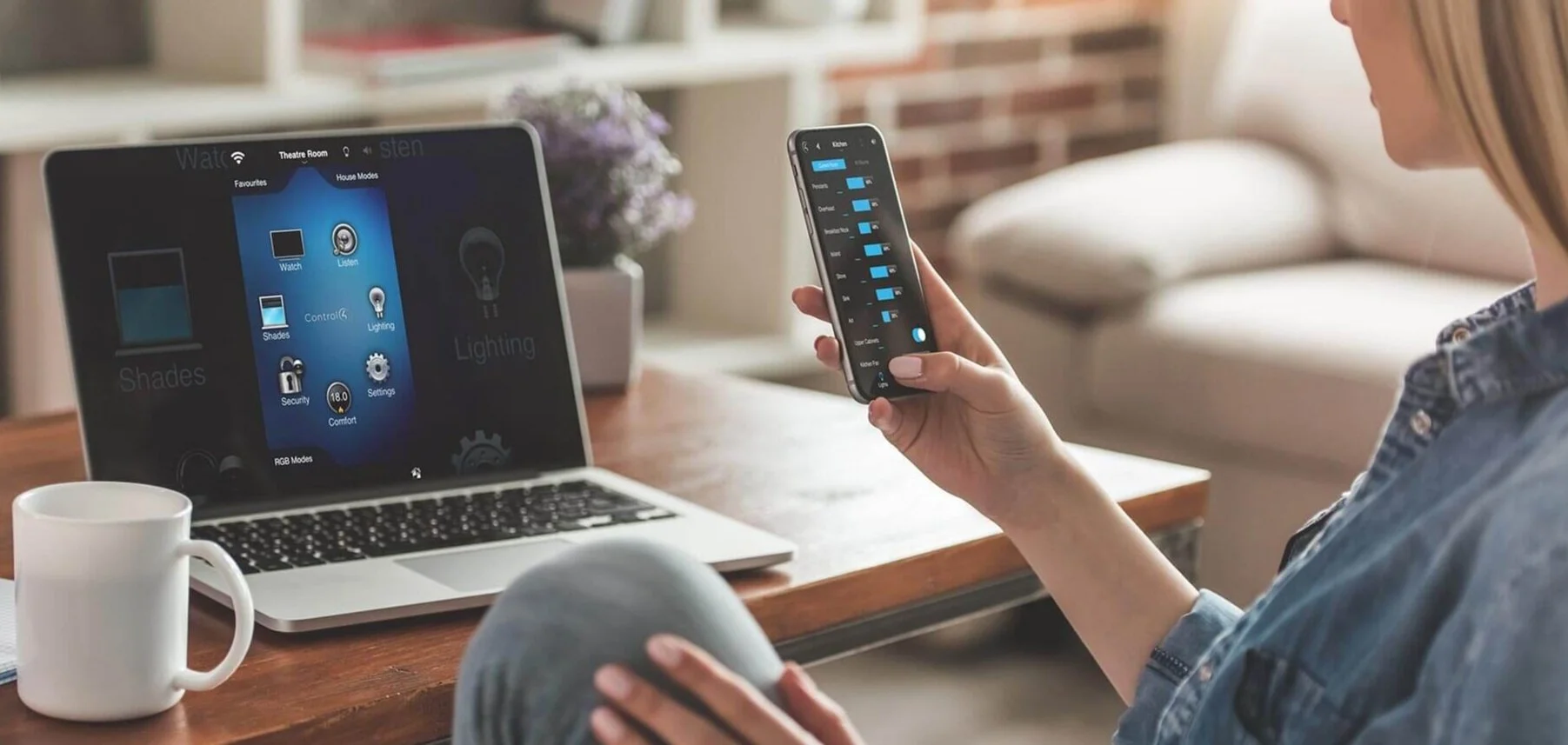
Here is something the smart home marketing world does not tell you: most of the “smart home” content online is written by people who have never touched a junction box. They write about Alexa and mood lighting and voice-controlled blinds like the infrastructure behind all of it is just sort of… there. It isn’t.
At Kato Electrical, smart home automation is an electrical job. It involves your panel, your circuits, your wiring, and — in a city where half the housing stock was built before 1985 — a careful look at whether your existing electrical infrastructure can actually support what you want to install. A smart thermostat is a thermostat. A smart switch is a switch. They both need wiring, they both need to comply with the 2024 Canadian Electrical Code (adopted in BC on March 4, 2025), and many of them will not work correctly in older Vancouver homes without modifications first.
What we do is the electrical side of home automation — the part that requires a licence, a permit, and someone who knows the difference between a neutral wire and a ground wire at 11 o’clock on a Tuesday morning in a 1950s Kitsilano character home. The rest — choosing which app you prefer, deciding between Alexa or Google Home, picking a colour for your smart bulbs — that is entirely up to you.
What We Install — and What We Don’t
We focus on the electrical work that makes smart home systems actually function safely. If it needs a permit, involves your panel, or requires a licensed hand behind the wall, that is our scope.
Smart Lighting Controls
Lutron Caseta dimmers, smart switches, whole-home lighting scenes. Includes neutral wire assessment and addition where needed for older homes.
Smart Thermostats
Ecobee, Nest, Mysa — specifically designed for BC electric baseboard systems. Wired correctly into your heating circuits, not just clipped in and hoped for.
EV Charger Circuits
240V dedicated circuit installation for Level 2 EV chargers. Includes load calculation to confirm panel capacity — or a service upgrade if needed.
Smart Panel & Circuit Management
Smart breaker panels and circuit monitoring systems. Pairs well with a panel upgrade if you’re already planning one.
Security & Camera Wiring
Hardwired cameras, smart doorbells, and low-voltage security system wiring. Video doorbells need a proper transformer — not all homes have one.
Whole-Home Audio & AV
In-wall speaker wiring, media room circuits, and structured wiring panels that keep your AV, data, and phone wiring organised and out of the walls where it belongs.
We also install EV chargers, heat pump systems with smart thermostat integration, and conduct thermal imaging assessments for older homes where hidden wiring issues might interfere with smart home plans.
What Your Home Needs First
This is the section that saves people money. Not because we talk them out of things — because we catch the things that would have caused problems later, before they cause problems.
Panel Capacity
Smart thermostats draw almost no power on their own. An EV charger, a heat pump, a hot tub, and a smart lighting system running simultaneously is a different story. Before any significant smart home installation, we do a load calculation on your existing panel to confirm it can handle the combined demand. Homes running on 100-amp service — common in pre-1990 Vancouver neighbourhoods — often need a service upgrade before EV charging or heat pump integration makes sense. Understanding your electrical panel layout is always the starting point.
Neutral Wires — The Silent Dealbreaker
Every modern smart switch and dimmer requires a neutral wire at the switch location to power its electronics. The 2018 Canadian Electrical Code made a neutral conductor mandatory at every control location — but older homes used two-wire switch loops with no neutral. In a Kitsilano home from 1965, finding a neutral at the switch is genuinely rare. We assess this before you order anything. Our BC electrical code changes guide covers exactly why this matters.
Older Wiring Compatibility
If your home has aluminum branch wiring or — in some of Vancouver’s older East Side homes — knob and tube wiring, smart home integration requires additional assessment. Aluminum wiring needs devices with compatible ratings. Knob and tube, depending on condition and location, may need to be addressed before any significant load is added. A thermal imaging inspection before planning is worthwhile in any home built before 1970.
Not Sure If Your Home Is Ready?
Book a free assessment. We’ll look at your panel, check your wiring, and tell you exactly what’s needed — no upselling, no jargon, just a straight answer.
Permits: City of Vancouver vs. the Suburbs
This is where a lot of online content — including some of our own older pages, in the spirit of honesty — gets it wrong. Let’s be precise.
Any smart home work involving new circuits, panel modifications, or EV charger wiring requires an electrical permit. Where that permit comes from depends entirely on where your home is located. The two systems are completely separate.
| Location | Permit Authority | Reference |
|---|---|---|
| City of Vancouver Kitsilano, East Van, Strathcona, Mount Pleasant, Yaletown, Dunbar, Point Grey, West End, Commercial Drive, Grandview-Woodland |
City of Vancouver Electrical Inspections Branch (Vancouver Electrical By-law 5563) vancouver.ca/electrical-permit |
515 West 10th Ave, Development & Building Centre |
| Surrounding Municipalities Burnaby, Surrey, Richmond, Coquitlam, Port Coquitlam, Port Moody, New Westminster, North Vancouver, West Vancouver, Delta, Maple Ridge |
Technical Safety BC technicalsafetybc.ca/permits |
Online application through TSBC portal |
We handle permits as part of every project — including knowing which authority applies to your specific address. Homeowners who call the wrong office waste days they didn’t need to waste. We deal with both systems every week across the Lower Mainland.
BC Rebates You Can Actually Use in 2026
“You may qualify for incentives” is the least useful sentence in the English language. Here is what is actually available right now, with real numbers, as of July 2026:
$350
EV Charger — Single Family Homes
BC Hydro covers up to 50% of purchase and installation costs to a $350 maximum for eligible Level 2 chargers at single-family homes, row homes, and duplexes. Add $200 for an eligible EV power management device. BC Hydro EV rebate details →
+ $50/season
EV Charger — Peak Saver Enrollment
Enroll a compatible smart EV charger in BC Hydro’s Peak Saver program for a $250 enrollment credit, plus $50 per season in ongoing rewards. Peak Saver details →
+ seasonal
Smart Thermostat — Peak Saver
Enroll an eligible Ecobee, Nest, or Mysa thermostat in BC Hydro’s Peak Saver for a $50 enrollment bonus plus ongoing seasonal rewards. BC has also announced free smart thermostats (valued at $350) for homes with electric baseboard heating — available fall 2026.
$4,000
Heat Pump + Smart Thermostat Bundle
CleanBC rebates for heat pump installation can reach $4,000 depending on system type. When a smart thermostat is part of the heat pump installation scope, it falls within the eligible work. We handle all rebate paperwork as part of the project. Heat pump installation details →
Rebate programs change. The figures above are current as of July 2026 and should be confirmed at time of booking — we verify eligibility for every project as part of the assessment process.
What It Costs — Honest Ranges
“Smart home installation costs $500 to $50,000” is technically true and completely useless. Here are realistic ranges for the work we actually do most often, based on current quotes across Vancouver and Burnaby:
These are labour and materials ranges — they don’t include device costs if you’re supplying your own equipment, and don’t include permit fees (which vary by municipality and scope). Heritage homes, older wiring, and multiple floors push the number up. New construction or recent renovations with modern panels keep it down.
Why This Needs a Licensed Electrician, Not a Handyman
We’re not going to spend a lot of time on this because if you’re reading a licensed electrical contractor’s website, you probably already sense the answer. But it’s worth being direct about the specific risks — because “liability” is abstract and “your house caught fire” is not.
Smart home work that involves wiring — hardwiring switches, running new circuits, working in your panel — requires a permit in BC. Permitted work requires a licensed electrician. Unpermitted electrical work creates real problems at two points: when your insurer finds out after a claim, and when you try to sell the house and a home inspector flags it. Neither conversation is pleasant.
The 2024 Canadian Electrical Code has specific requirements for smart home wiring that a general handyman simply isn’t trained to follow — neutral wire provisions at smart switch locations, AFCI protection for modified circuits in renovations, low-voltage cable separation rules. These are not bureaucratic formalities. They are the things that prevent fires.
For insurance inspection compliance and for work undertaken during electrical renovations, having a licensed electrician on record is the difference between a smooth process and an expensive redo. We handle everything — assessment, permit, installation, inspection coordination. And if something goes wrong with an existing system, troubleshooting and repair is also in our scope.
Frequently Asked Questions
The questions we get every week from Vancouver homeowners planning smart home upgrades — answered honestly.
It depends on the scope. Plugging in a smart plug or swapping a battery-operated thermostat? No licence or permit required. Hardwiring smart switches, installing new 240V circuits for EV chargers, modifying your electrical panel, or running low-voltage wiring through walls? Yes — that work requires a licensed electrician and an electrical permit in BC.
In the City of Vancouver specifically, permits go through the City’s own Electrical Inspections Branch under Vancouver Electrical By-law 5563 — not through Technical Safety BC, which handles surrounding municipalities like Burnaby, Surrey, and Richmond. Your licensed electrician knows which authority to use for your address and handles the permit process as part of the job.
Realistic ranges from our current Vancouver and Burnaby projects: Smart thermostat installation $180–$320 per zone. Smart dimmer/switch installation $150–$280 per switch, including neutral wire additions if needed. EV charger circuit $800–$1,800. Whole-home Lutron smart lighting (6–12 switches) $2,500–$6,000. A panel upgrade, if required first, typically runs $3,000–$8,000.
What moves the number up: heritage homes, aluminum or knob-and-tube wiring, panels in difficult locations, multiple floors. We give you an accurate, written quote after a free assessment — not a ballpark over the phone.
Not always — but more often than people expect. Smart thermostats and lighting controls draw minimal power and rarely require a panel upgrade on their own. The calculation changes when you’re adding high-draw systems alongside the smart home work: EV chargers, heat pumps, induction ranges, or air conditioning.
Vancouver-area homes built before 1990 commonly run on 100-amp service. A 100-amp panel serving a home that’s adding an EV charger, a heat pump, and a hot tub may not have the capacity for all of it safely. A load calculation tells you exactly where you stand. See our service upgrade guide for what that involves.
As of July 2026, the main available rebates are:
EV Charger: Up to 50% of costs to a $350 maximum for eligible Level 2 chargers at single-family homes. Add $200 for an eligible EV power management device. Enroll a compatible smart charger in BC Hydro’s Peak Saver for a $250 enrollment credit plus $50 per season.
Smart Thermostat: $50 enrollment bonus through BC Hydro’s Peak Saver for eligible Ecobee, Nest, or Mysa thermostats. Free smart thermostats (valued at $350) announced for homes with electric baseboard heating — available fall 2026.
Heat Pump: CleanBC rebates up to $4,000 when a heat pump is installed. We verify current eligibility as part of every project assessment.
“Smart home installer” is not a regulated trade in BC. Anyone can use that title. A licensed electrician holds a Certificate of Qualification issued under BC’s Safety Standards Act and is authorised to perform electrical work, pull permits, and have their work inspected.
An unlicensed installer cannot legally pull an electrical permit in BC, which means any wiring work they do is unpermitted. Unpermitted electrical work can void your homeowner’s insurance, complicate resale, and create safety issues that are expensive to fix after the fact. Kato Electrical’s team are all licensed electricians, carrying $5M liability insurance. When we do smart home work, it is permitted, code-compliant, and inspected. That is the meaningful difference.
Serving All of Greater Vancouver
We install smart home systems across the Lower Mainland. Whether you’re in a heritage home in East Van, a condo in Yaletown, or a newer build in Maple Ridge — the same licensed team, the same standard of work.
Ready to Make Your Home Smarter?
Peak season books fast. Call us now or book your free assessment online — we’ll check your wiring, confirm what it needs, and give you a straight quote. No pressure, no jargon, no surprises on installation day.
Monday–Friday 8:00 AM–4:00 PM | Same-week assessment usually available