
Why Should You Install a Subpanel in Your Home?
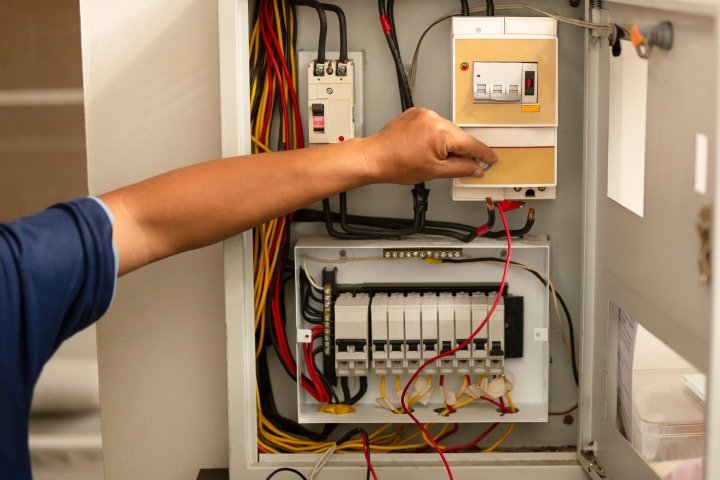
A crowded main panel is not just inconvenient — it is a problem quietly getting worse. If you are running out of breaker slots or relying on extension cords, now is the right time. Call Kato Electrical: (604) 239-3084 — subpanel assessments are free.
What Is an Electrical Subpanel? When You Need One and Why It Matters
Most homeowners know their electrical panel exists. Fewer know where it is. Even fewer have opened it recently to check whether it has enough room to handle everything they are asking of it. The main electrical panel is one of those household components that gets attention exactly twice: once when the house is built, and once when something goes wrong.
A subpanel is the solution to a main panel that is running out of room — and it is a better solution than the alternatives, which tend to involve tandem breakers, extension cords running across the property, and an electrician who shows up one day to find a panel that nobody wants to work in. This guide explains what a subpanel actually is, the situations that make one genuinely necessary, and the signs that you are probably already overdue for one.
What Is an Electrical Subpanel?
Your home's main electrical panel is the entry point for power from the utility grid. Every circuit in the house — lighting, outlets, appliances, HVAC — originates from a breaker in that panel. It is, in the most literal sense, the nerve centre of your home's electrical system.
A subpanel is a secondary distribution panel that draws its power from the main panel via a dedicated feeder circuit. It has its own set of breakers and distributes power independently to a specific area — a garage, a workshop, a basement suite, an outbuilding, or any space that benefits from having its own local electrical management point.
A subpanel does not generate or increase electrical capacity. It redistributes what the main panel provides. Think of the main panel as the water main, and the subpanel as a secondary distribution valve for one section of the property. The total flow comes from the same source — the subpanel just gives that flow a dedicated and organized path to a specific area. (And unlike a crowded main panel that makes electricians go quiet and start writing estimates, a well-organized subpanel is actually a pleasure to work in.)
Main Panel vs. Subpanel — The Key Differences

| Feature | Main Panel | Subpanel |
|---|---|---|
| Power source | Direct from utility grid via meter | Fed by main panel via feeder circuit |
| Can increase capacity | Yes — through service upgrade | No — bounded by main panel capacity |
| Location | Typically at utility entry point | Near the area it serves |
| Controls total home power | Yes | No — controls only its served area |
| Has main disconnect | Yes — main breaker | Depends — may or may not have one |
| Best for | Whole-home power distribution | Additions, outbuildings, large renovations |
The question we get most often is: "Do I need a subpanel or a panel upgrade?" The honest answer depends on whether your main panel has sufficient capacity remaining. If the panel is full but the total service size (amperage) is adequate for your needs, a subpanel addresses the distribution problem. If the service size is also insufficient for your growing electrical demands — which is common in older Vancouver homes — a panel upgrade comes first. We assess both during a consultation. Call us: (604) 239-3084
Six Reasons to Install a Subpanel

-
Reason 01
Your Main Panel Is Overcrowded
A main panel with every slot occupied is not just inconvenient — it limits what you can do with your home's electrical system going forward. Adding new lighting, a baseboard heater, an EV charger, or a dedicated appliance circuit becomes impossible without removing something. A crowded panel is also harder for an electrician to work safely in, which increases both the time and cost of any future work. A subpanel takes the overflow, freeing up slots in the main panel and creating organized capacity for future circuits.
-
Reason 02
You Are Using Tandem Breakers to Squeeze More Circuits In
Tandem breakers — two breakers sharing one slot — are a sign that the main panel is already being pushed beyond its intended design. While not necessarily illegal depending on the panel's load centre listing, relying on multiple tandem breakers to accommodate circuits is a short-term patch that reduces safety margins and makes the panel harder to work in. In many jurisdictions, excessive use of tandem breakers is a code violation. A subpanel is the proper solution to the underlying capacity problem.
-
Reason 03
You Are Renovating or Adding Space
A home addition, new detached garage, basement suite, or workshop all require new circuits. The cleanest approach — both for the installation and for future management — is to feed those new circuits from a subpanel located near the addition rather than running them all the way back to the main panel. The subpanel keeps the wiring organized, makes future changes easier, and provides a local disconnect point for the new space. Our electrical renovation services →
-
Reason 04
You Have a Separate Unit or Home Business
If your property includes a secondary suite, a rental unit, or a space used for a home-based business, a subpanel allows the electrical consumption of that space to be managed independently from the primary household. This simplifies billing if you are renting, reduces the risk of one space's electrical issues affecting the other, and makes it easier to add circuits specific to the business or suite without touching the main panel at all.
-
Reason 05
Your Main Panel Is Hard to Access
Most main panels are located in basements, utility rooms, or attics — places that are inconvenient to reach, particularly in an emergency. A subpanel installed on the floor where you live and work means a tripped breaker can be reset without the full expedition to the basement. For detached outbuildings, workshops, and garages, a subpanel eliminates the need to walk to the main house to address any electrical issue. Convenience is a real safety benefit.
-
Reason 06
Safety — Fewer Wires in the Main Panel Means Fewer Risks
Each wire entering the main panel is a potential failure point — a connection that can loosen, overheat, or arc over time. An overcrowded panel with dozens of connections crammed into a limited space is harder to inspect, harder to maintain, and statistically more likely to develop a fault that goes undetected. A subpanel moves a portion of those connections to a secondary panel, reducing the density in the main panel and making both panels easier to inspect and maintain safely. Technical Safety BC requires all electrical work in BC to be performed by a licensed electrician — subpanel installation included.
Signs You Need a Subpanel Right Now
Some situations make the case for a subpanel gradually; others are more pressing. These are the signals that tend to mean the conversation should happen sooner rather than later.
-
Your main panel has no available breaker slots
Every slot occupied and more circuits needed means the only options are tandem breakers (a workaround), a panel upgrade (the full solution), or a subpanel (the right solution for the specific area). A licensed electrician can assess which applies to your situation. -
You cannot identify the right breaker without hunting
If finding a specific breaker requires more than a quick scan of the panel, the panel is overcrowded and poorly organized. This is not just inconvenient — it creates real risk in situations that require a fast response. A subpanel for a specific area, properly labelled, eliminates this problem for its served circuits. -
You are using extension cords to reach the garage, workshop, or outbuilding
Extension cords are not a permanent wiring solution for spaces that need reliable power. They are a trip hazard, a fire risk under sustained load, and a sign that the space's electrical needs have outgrown the current setup. A subpanel in the outbuilding or garage gives it proper, code-compliant circuit infrastructure. -
You are planning a renovation or addition that requires new circuits
Before the renovation starts — not after — is when the subpanel conversation belongs. Installing a subpanel as part of a renovation is significantly less disruptive and less expensive than retrofitting it afterward. If the addition needs more than two or three circuits, a local subpanel is almost always the better approach. -
You have a basement suite, rental unit, or home business that shares your main panel
Shared electrical infrastructure between a primary residence and a separate suite or business creates management complexity and a complete lack of separation. A subpanel for the secondary space clarifies consumption, simplifies any future work in either space, and is often a requirement when registering a secondary suite with the city.
The pattern we see most often is a homeowner who has been aware that the main panel was getting crowded for a year or two, decides to add a circuit for a new appliance, and discovers at that point that there is no room — and that what looked like a simple job is now a panel project. The assessment costs nothing. The delay can cost considerably more. Call us: (604) 239-3084
What Subpanel Installation Involves
A subpanel installation is a significant electrical project — not a DIY job, and not something that can be done without a permit. Here is what is involved:
✓ Assessment of your main panel's available capacity and the subpanel's required amperage
✓ Selection of the subpanel location relative to the area it will serve
✓ Running a feeder cable from the main panel to the subpanel location
✓ Installation of the subpanel enclosure and breakers
✓ Wiring branch circuits from the subpanel to the served area
✓ Permit application through Technical Safety BC
✓ Inspection and approval
✓ Labelling and documentation
Subpanel installation in Vancouver typically ranges from $1,500 to $4,000 depending on panel amperage, distance between panels, conduit requirements, and the number of branch circuits being installed. Installations in detached garages or outbuildings tend to be at the higher end due to the run distance. Kato Electrical provides upfront pricing after an assessment — no surprises on the invoice. Call us: (604) 239-3084
Related services from our team:
Related reading: Why Homeowners Are Upgrading Their Electrical Panels | 5 Warning Signs Your Breaker Box Needs Repair | Is Your Home's Electrical System Ready for a Heat Pump? | 10 Overlooked Electrical Mistakes Homeowners Make
↑ Back to topIs Your Main Panel Running Out of Room? Let's Talk.
Our licensed electricians assess your panel capacity, advise on subpanel vs. upgrade options, and handle the full installation — permits included, upfront pricing guaranteed.
Serving All of Greater Vancouver
Common questions about electrical subpanels — answered by our licensed Vancouver electricians.