

Bathroom & Ceiling Fan Installation
Done Properly. Vented to the Outside.
If your bathroom fan has been humming away for years but your mirror still fogs up completely — there’s a good chance it’s venting into the wall. We’ve seen it in more Vancouver homes than we care to count. Licensed installation, correct ductwork, code-compliant wiring — first time, every time.
⚡ One Vancouver wet season with a fan venting into the wall costs more in mould remediation than a proper installation. Don’t wait.
Bathroom Exhaust Fan Installation
A bathroom exhaust fan is not optional in BC — it is a legal requirement. BC Building Code Section 9.32.3.6 requires an exhaust fan in every bathroom and water-closet room, sized to a minimum of 50 CFM for a standard bathroom. What the code does not tell you is what happens when that fan is sized correctly but vented incorrectly — which, in our experience, describes a significant portion of older Vancouver homes.
We install, replace, and repair bathroom exhaust fans across the Lower Mainland. The job involves more than swapping a grille for a new one. It means confirming the fan is the right CFM for the space, that the duct runs correctly to the exterior (not into the attic or wall cavity), that the wiring is properly connected, and that the whole thing actually removes moisture rather than just making a noise while moisture goes somewhere it shouldn’t.
What We Install
Standard exhaust fans, exhaust fan and light combinations, exhaust fan and heater combinations, humidity-sensing fans that run automatically when moisture is detected (no forgetting to turn it on), and smart ventilation fans that integrate with home automation systems and can be controlled from your phone. For sizing guidance and seasonal use, see our dedicated bathroom fan guide for Vancouver winters.
What We Repair
Fan not turning on, fan running but not removing steam, noisy or rattling fan housing, fan duct disconnected or collapsed in the attic, fan venting into the wall instead of outdoors. The last one is a troubleshooting call we make regularly in pre-1990 East Van and Burnaby homes — the fan was installed when code enforcement was less rigorous, and nobody has checked since. More on that below.
The Mould Problem Nobody Talks About
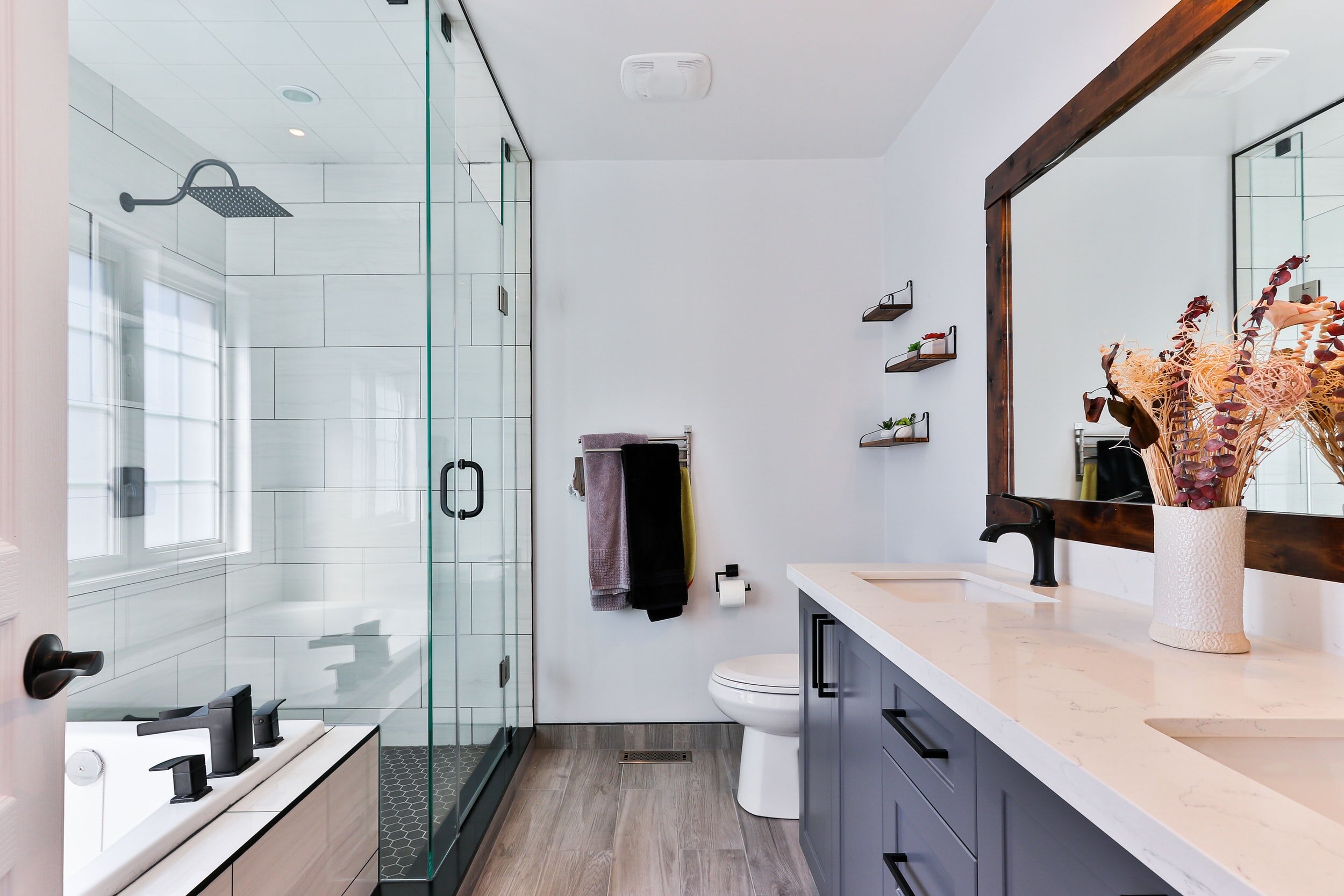
Vancouver gets approximately 1,150mm of rain a year. Winters are damp in a way that people who haven’t lived here find difficult to describe accurately. A bathroom exhaust fan that vents to the exterior is removing moisture from the most humidity-intensive room in your home and sending it outside where it belongs. A bathroom fan that vents into the wall or the attic is doing the opposite: concentrating that moisture in an enclosed space with no drainage, no airflow, and a lot of wood framing.
Mould follows within months, not years. And mould in the wall cavity or attic is not a wipe-down job — it is a remediation project. We are not going to quote you a scare number here because remediation costs vary significantly by scope and location, but the consistent finding from homeowners who have been through it is that they wish they had fixed the fan first.
Beyond mould, a badly vented fan accelerates rot in roof sheathing, degrades insulation effectiveness, and can create conditions that a building inspector flags on sale. If your bathroom mirror fogs completely after a shower, stays fogged for more than a couple of minutes after the fan runs, or if you notice peeling paint or soft spots near the ceiling — those are not aesthetic problems. They are ventilation problems. And ventilation problems are electrical problems. We can diagnose them.
Ceiling Fan Installation
Ceiling fan installation sounds simple until you get into it. The fan itself might weigh 15 kg, the box in the ceiling has to be rated for fan support (most standard light fixture boxes are not), the wiring has to include a neutral at the switch location for any modern smart or remote-controlled fan, and if there was never a ceiling fan at that location before, you need a new circuit. None of that is insurmountable. All of it is why this is an electrician’s job rather than a weekend project.
We install ceiling fans in living rooms, bedrooms, covered outdoor patios, home offices, garages, and high-ceiling great rooms where you need a fan with a proper canopy drop rod. For the full case on why ceiling fans are worth installing in Vancouver homes — energy bills, year-round functionality, the direction-switch trick — see our ceiling fan installation guide. This page focuses on the electrical work.
What Determines Whether You Need an Electrician
Replacing an existing ceiling fan on an existing circuit: straightforward installation, usually no permit required, done in an hour or two depending on access. The main variable is whether the existing box is fan-rated — if not, we replace the box before mounting the fan.
Installing a ceiling fan where there was previously a light fixture: needs assessment. If the existing circuit has a neutral wire at the switch location, we can often replace the light fixture with a fan without new wiring. If there’s no neutral — common in homes wired before 2018 — we run new wiring. This is where knowing the home’s electrical age matters.
Installing a ceiling fan where no fixture existed: new circuit required. Permit required. This is a full electrical job, and the complexity depends on panel access, ceiling height, and whether there is attic space above for routing. If your home has aluminum branch wiring or knob and tube wiring, that adds a compatibility assessment step. We can also look at whether a lighting upgrade makes sense at the same time.
What Your Home Needs First
Before either type of fan gets installed, a few things need to be confirmed. We do this as part of every assessment — it takes thirty minutes and prevents three callbacks.
Attic and Duct Access
Bathroom fan ductwork needs to reach the exterior. In most Vancouver homes, that means running through the attic to a roof or soffit vent, or through the exterior wall. The routing depends on your home’s construction, and in older homes with tight attic access or complex framing, routing can be the most time-consuming part of the job. We assess this before quoting.
Electrical Panel Capacity and Wiring Age
A new bathroom fan circuit is a modest load on your panel. A new ceiling fan circuit is similar. Neither typically requires a panel upgrade on its own — unless your panel is already at capacity or you are adding multiple circuits as part of a broader electrical renovation. Homes with aluminum branch wiring need devices with AL-rated wiring connections. Homes with knob and tube wiring need careful assessment before any new load is added to existing circuits. Our updated BC electrical code guide covers what this means in practice.
Thermal Imaging for Older Homes
If your home is pre-1970 and you are not certain what is in the walls and ceiling, a thermal imaging inspection before fan installation can identify existing moisture damage, insulation gaps, and hidden wiring issues that would affect how we run new circuits or ductwork. It is not always necessary, but in East Van character homes and Burnaby ranchers from that era, it saves surprises mid-job.
Permits: City of Vancouver vs. the Suburbs
Whether your fan installation requires an electrical permit depends on what the job actually involves — not just where you live, but what work is being done. Here is the honest breakdown:
Permit required: new circuit installation, fan installation where no wiring existed, significant duct rerouting that requires wall or ceiling penetration.
We confirm which category your job falls into before we start.
When a permit is required, the authority that issues it depends entirely on where your home is located. These are two completely separate systems and the most common mistake is assuming Technical Safety BC handles everything in the Lower Mainland. It does not.
| Location | Permit Authority | Reference |
|---|---|---|
| City of Vancouver Kitsilano, East Van, Strathcona, Mount Pleasant, Yaletown, Dunbar, Point Grey, West End, Commercial Drive |
City of Vancouver Electrical Inspections Branch (Vancouver Electrical By-law 5563) vancouver.ca/electrical-permit |
515 West 10th Ave, Development & Building Centre |
| Surrounding Municipalities Burnaby, Surrey, Richmond, Coquitlam, Port Coquitlam, Port Moody, New Westminster, North Vancouver, West Vancouver, Delta, Maple Ridge |
Technical Safety BC technicalsafetybc.ca/permits |
Online application through TSBC portal |
We pull the correct permit for every job that requires one and coordinate the inspection. You do not need to navigate this yourself.
Ready to Sort Out Your Fans?
Whether it’s a bathroom fan that’s venting into the wall, a ceiling fan where there’s never been one, or a replacement that’s been on the list for two years — we can assess and quote the same week.
Frequently Asked Questions
The questions we get every week from Vancouver homeowners about bathroom and ceiling fan installation — answered without the runaround.
Yes. BC Building Code Section 9.32.3.6 requires an exhaust fan in every bathroom and water-closet room, sized to at least 50 CFM. The fan must vent directly to the exterior — venting into an attic, wall cavity, or ceiling space does not meet code.
Older homes are not retroactively required to comply unless renovation work triggers it — but a fan venting into the attic causes ongoing moisture damage regardless. We often fix duct termination issues because the homeowner notices ceiling damage, not because an inspector told them to.
Like-for-like fan replacement on existing wiring: $180–$320. New installation requiring a new circuit and ductwork: $450–$900. Duct rerouting to the exterior — needed when an existing fan vents into the attic — runs $350–$750 depending on duct length and attic access.
What moves the number up is difficult attic access, long duct runs, and older homes where routing requires more time. We quote after seeing the installation location, not over the phone — attic access in a 1960s Vancouver Special is a very different job from a new Burnaby townhouse.
For a like-for-like replacement on an existing dedicated circuit — typically no permit required. For new circuit installation, significant duct rerouting, or installing where no fan existed before — permit required.
In the City of Vancouver (Kitsilano, East Van, Strathcona, Mount Pleasant, Yaletown), permits go through the City of Vancouver Electrical Inspections Branch under Vancouver Electrical By-law 5563 — not Technical Safety BC. In Burnaby, Surrey, Richmond and other surrounding municipalities, permits go through Technical Safety BC. We confirm which applies and handle it.
Four common causes in rough order of frequency:
1. The duct terminates in the attic, not the exterior. Most common cause in pre-1990 Vancouver homes. The fan runs but moisture deposits inside the building.
2. The fan is undersized. A 50 CFM fan in a large ensuite does essentially nothing. Larger bathrooms need proportionally larger fans.
3. Collapsed or disconnected flexible duct. Attic duct kinks and disconnects at joints over time. A duct that worked in 2010 may have a failed section since.
4. Worn motor. Fans running daily for 15+ years often spin but move minimal airflow. If your mirror stays fogged despite the fan running, the motor is likely failing.
Sometimes — it depends on two things: whether the existing box is fan-rated (most standard light fixture boxes are not), and whether there is a neutral wire at the switch location.
Homes wired before 2018 often have two-wire switch loops with no neutral at the switch. If there is no neutral, we either run new wiring or use a fan model compatible without one. A quick assessment before you order the fan saves the frustration of discovering the incompatibility after the return window has closed.
Serving All of Greater Vancouver
We install and repair bathroom fans and ceiling fans across the Lower Mainland — from character homes in East Van to newer builds in Maple Ridge. Same licensed team, same standard of work, correct permit authority for your municipality.