
Why BC Insurers Are Refusing to Cover Homes with Fuse Boxes
What's actually behind the decline letters, what insurers will accept instead, and how Lower Mainland homeowners are getting coverage reinstated — usually faster and cheaper than they expect.

A homeowner in Queen's Park called us in March with a letter in her hand. Thirty days to remediate, or the policy wouldn't renew. Her house was a 1949 build, tidy as anything, and the panel in the basement had been quietly doing its job since before she was born. What the insurer's file didn't say — and what we found in about four minutes with a flashlight — was that somebody had put 30-amp fuses on circuits wired with 14-gauge conductors. Three of them. That's the thing that actually gets houses in trouble, and she had no idea it was there.
We've had a version of that call every few weeks for the past two years. So let's go through what insurers are really reacting to, what "refusing" looks like in practice, and what it takes to get to yes.
01What insurers are actually reacting to
Here's the part that trips people up. Underwriters aren't afraid of fuses as a technology. A properly sized fuse is a perfectly good overcurrent device — arguably a purer one than a breaker, since it can't be reset by someone who doesn't want to walk downstairs again. What the fuse box does is flag a build era, and the build era brings friends.
| What the underwriter sees | What they're inferring |
|---|---|
| Fuse panel | Pre-1965 install, likely never upgraded, possibly tampered with |
| 60-amp service | Sized for a 1950s house running a fridge and a radio, not a modern load |
| Two-prong outlets throughout | Ungrounded branch circuits; no path for fault current |
| No permit record against visible renovations | Unknown workmanship behind the drywall |
| Knob-and-tube or aluminum still live | A separate remediation file on top of the panel one |
That last row matters more than people realise. If you've got a fuse panel, there's a fair chance you've also got knob-and-tube wiring somewhere in the walls, and insurers treat that as its own conversation — we covered it in detail in our guide to knob-and-tube wiring and insurance. Homes wired between roughly 1965 and 1976 add aluminum branch wiring to the pile.
BC brokers are pretty candid about this. Acera Insurance, for one, publishes plainly that some insurers won't write 60-amp service at all, and that whether you can get covered depends on the square footage, how many major appliances are electric, and the individual company's appetite. That last clause is the honest one. There is no single BC rule here — practice varies by insurer, which is exactly why two neighbours on the same block get different answers.
02The real problem: oversized fuses
If you take one thing from this article, take this.
A fuse is a deliberate weak link. Screw a 15-amp fuse into a circuit wired with 14-gauge copper and the fuse is designed to fail before the wire ever gets hot enough to matter. That's the whole system, and it works.
But fuses are also the easiest overcurrent device on earth to defeat. The circuit keeps blowing because there's a space heater and a kettle on it. Somebody gets tired of the basement stairs. They walk into a hardware store, buy a 30-amp fuse because it fits the same socket, and screw it in. The blowing stops. Everybody's happy. And now that 14-gauge wire — rated to carry 15 amps — is protected by a device that won't do anything until 30 amps are flowing through it. The wire is the fuse now. Inside your wall.
We find this constantly. Not occasionally — constantly. It's the single most common dangerous condition we pull out of fuse panels in Metro Vancouver, and it's invisible from outside the panel cover. A breaker panel doesn't have this failure mode in the same way: you can't buy a 30-amp breaker that snaps into a 15-amp slot at Home Depot on a whim, and swapping one takes tools and intent.
So when an underwriter looks at a fuse box, they're not making a statement about 1950s engineering. They're pricing the odds that somebody in seventy years reached for the wrong fuse. In our experience, those odds are not small.
03What "refusing" looks like in practice
"Refused" is a word that covers about five different outcomes, and knowing which one you're in changes what you do next.
- Flat decline at application. Common with newer direct writers. The file never reaches an underwriter — a screening question about panel type ends it.
- Non-renewal notice. You've been covered for years, the insurer re-rated the book, and now your house doesn't fit. Usually comes with a deadline.
- Bind with conditions. Coverage starts, but you have 30, 60, or 90 days to complete remediation and send proof. Miss it and the policy lapses.
- Bind pending inspection. They'll cover you if a licensed contractor puts in writing what's actually in the house. This is the most common one, and the most fixable.
- Bind with a surcharge. Specialty and high-risk markets will often take the risk at a real premium. Expensive, but it keeps a mortgage funding.
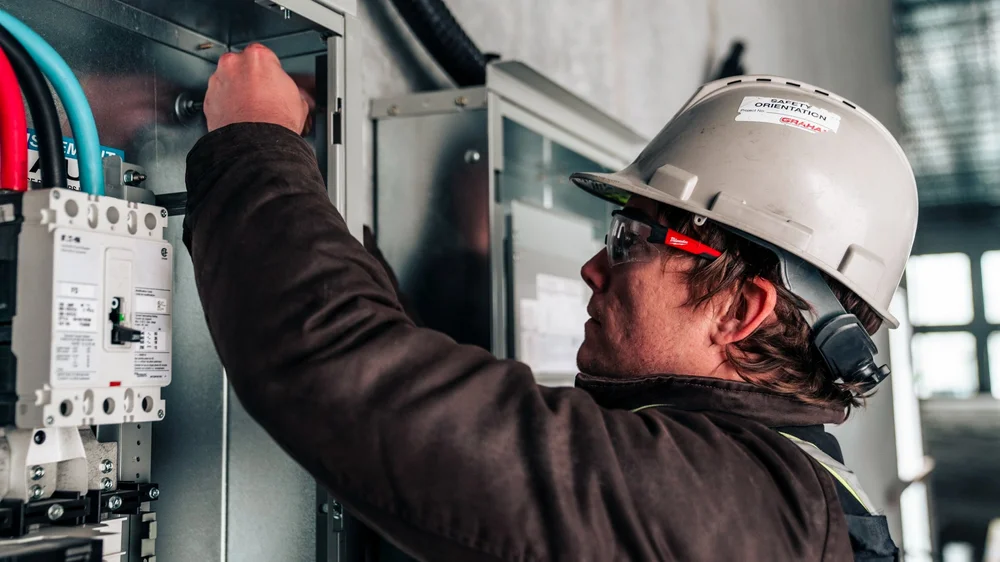
That fourth one is where most people's problem quietly evaporates. A documented insurance inspection — panel interior, service size, wiring types by circuit, grounding, fuse sizing against conductor gauge, all of it in a letter on contractor letterhead — regularly converts a no into a yes with conditions. We write these across the Lower Mainland every week, often inside a subject-removal window measured in days. Our walkthrough of what an insurance electrical inspection covers goes through it step by step.
One thing worth saying plainly, because it costs people money: don't guess on the application. If you tell an insurer you have breakers and you have fuses, you've created a misrepresentation problem that's far worse than the panel ever was. If you're not sure what's down there, find out first.
04Why this is escalating now
Fuse panels haven't changed. The houses haven't changed. What's changed is the load we're asking them to carry, and how much a claim costs.
Every BC home is being asked to do more electrically than it was ten years ago. Heat pumps replacing gas furnaces. EV chargers in driveways that used to hold one 15-amp receptacle for a block heater. Induction ranges, on-demand water heaters, air conditioning in a region that spent a century not needing it. A 60-amp service handled a 1955 household comfortably. It cannot handle a 2026 one, and the failure mode isn't a polite shutdown — it's heat at connections that were never sized for this.
Then there's the claims side. Rebuild costs in the Lower Mainland have climbed steeply, so an underwriter's downside on any given fire is far larger than it was a decade ago. When the exposure per claim goes up, the tolerance for known correlated risks goes down. That's the whole story, honestly. Electrical fire risk plus expensive houses equals tighter underwriting.
05Five minutes at your own panel
You don't need tools and you should not remove the cover — leave that to us. But you can answer most of an insurer's questions from the outside with a phone flashlight.
- Fuses or breakers? Round glass screw-in fuses or rectangular cartridge blocks mean a fuse panel. Toggle switches mean breakers.
- What's the main rated at? Look for the number on the main pull-block or the panel label. 60A is the one insurers react to. 100A is workable. 200A is comfortable.
- Read the fuse faces. Every screw-in fuse has its rating stamped on it. A row of 15s and 20s is normal. A 25 or a 30 in a residential lighting or receptacle circuit is a red flag — call someone.
- Any coins, foil, or a fuse with a wire across it? Stop reading and call an electrician today. That's not a renewal problem, that's a tonight problem.
- Two-prong outlets everywhere? Ungrounded circuits. Expect it to come up in underwriting.
- Is there a directory? An unlabelled panel makes every future job slower and every inspection vaguer. Worth fixing regardless — here's why a panel directory matters.
Warm spots, scorch marks, a buzzing sound, or a burning smell near the panel move this from a scheduling question to an urgent one. Those are the same symptoms we cover in warning signs your breaker box needs repair, and they apply just as much to fuse panels. Where we can't see a problem from outside the cover, thermal imaging finds the hot connections that a visual inspection misses.
06The fix: what it costs, what it involves, who issues the permit
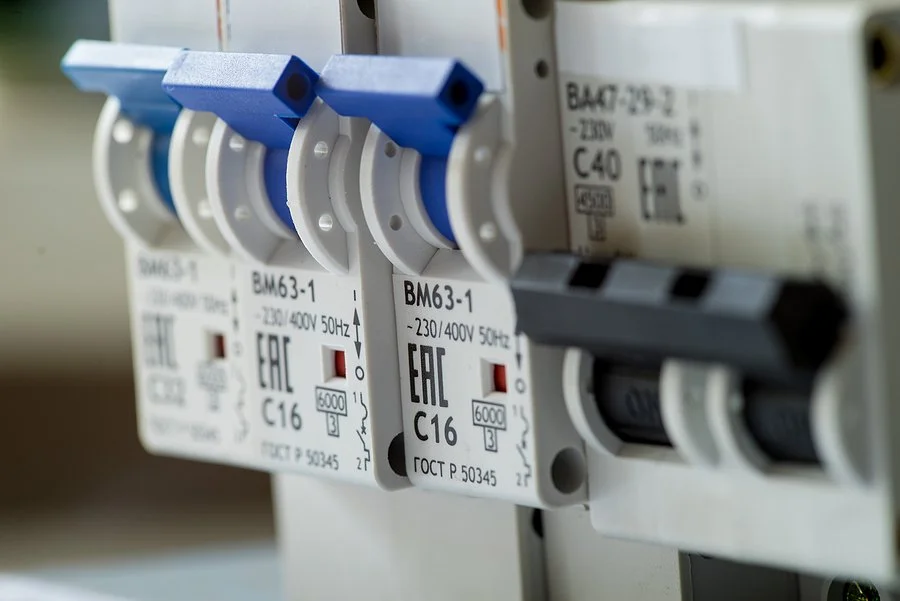
The remedy insurers want is a service and panel upgrade — replacing the fuse panel with a modern breaker panel, and usually raising the service from 60 amps to 100 or 200. If you're weighing 100 versus 200, our breakdown of a 100 to 200 amp service upgrade walks through the cost and process.
Timeline is usually days, not weeks, once scheduling and permitting line up. The work itself is typically a one-day shutdown for a straightforward residential swap. BC Hydro has to be involved for any change at the service entrance, and that coordination is often the longest pole in the tent.
Who issues your permit depends on your city
This surprises people, so it's worth being precise. Electrical permit authority in Metro Vancouver is split under BC's Safety Standards Act. In Kato's service area, these municipalities issue their own electrical permits and run their own inspections: Vancouver, Burnaby, Surrey, the City of North Vancouver, the District of North Vancouver, West Vancouver, and Maple Ridge. Vancouver's authority is grounded in its own statute rather than borrowed, which is why the city writes and maintains its own Electrical By-law.
Everywhere else in our area — Coquitlam, Port Coquitlam, Port Moody, New Westminster, Richmond, Delta, Squamish, and Whistler — electrical permits go through Technical Safety BC. (Richmond's delegation covers gas only, so its electrical still sits with the province.) Our city-by-city permits guide has the full breakdown.
Either way: get the permit. An unpermitted panel swap is worse than the fuse box was, because now you've got undocumented work on the exact system your insurer is asking about.
07If you've already been declined or non-renewed
Work it in this order.
- Get the reason in writing. "Electrical" is not a reason. Panel type, service size, wiring type — you need the specific condition, because that determines whether you're facing a $500 fix or a $20,000 one.
- Book the inspection before you book the work. Sometimes the finding is a handful of oversized fuses and a report is all the insurer needs. Don't buy a panel upgrade you might not need yet.
- Use a broker, not a comparison site. Appetite for older homes varies enormously between carriers, and a broker who writes Lower Mainland character homes already knows which markets will look at yours.
- Ask about interim coverage. Many insurers will bind with a remediation deadline rather than leave you uninsured. Being uninsured, even briefly, makes you harder to insure later — some carriers won't touch a home with a coverage lapse.
- Know your escalation route. If you believe a decision was handled improperly, insurers in BC are regulated by the BC Financial Services Authority, and the Insurance Bureau of Canada runs a consumer information line. Underwriting appetite itself isn't a complaint matter — but process and conduct are.
08When you don't need to panic
We'd rather tell you this than sell you something you don't need.
If your home has a 100-amp fuse panel, correctly sized fuses throughout, grounded three-prong circuits, and a permit history that matches what's visible — you have a functional, code-legal electrical system. It is not a hazard. Plenty of insurers will write it. You may pay a bit more, and you'll probably want to upgrade eventually for capacity reasons rather than safety ones, but nobody needs to panic on a Tuesday.
Equally: if you're on 200-amp service with a modern breaker panel and copper wiring, and someone's telling you that you need an inspection to keep your policy, ask which specific condition they're citing. Sometimes it's a data error on the file, and a phone call fixes it.
The homes that genuinely need to move are the 60-amp fuse services, anything with oversized fuses, anything with live knob-and-tube, and anything where the renovations and the permit record don't line up. If you're buying rather than renewing, our guide to electrical red flags by neighbourhood covers what to check before you remove subjects.
Got a letter with a deadline on it?
Kato Electrical is a licensed and insured Vancouver electrician serving the Lower Mainland from Squamish to Maple Ridge. We do insurance inspections and panel upgrades on short notice, with a written report your insurer will accept — and we'll tell you honestly if you don't need the full upgrade.
Call (604) 330-9097 Book an inspection09Frequently asked questions
Is it illegal to have a fuse box in BC?
No. There is no BC law requiring you to remove a fuse panel from an existing home, and a correctly sized fuse panel in good condition is a legal, functional overcurrent protection system. What you are running into is insurance underwriting, not legislation. Insurers set their own appetite, which is why one company will decline your home and another will write it with a surcharge.
Why do insurers care about fuse boxes if fuses work fine?
Because a fuse panel signals a set of correlated risks rather than a single defect. It usually means a pre-1965 installation, often a 60-amp service that is undersized for modern loads, frequently ungrounded two-prong circuits, and sometimes decades of unpermitted modification. The specific hazard underwriters worry about most is oversized fuses: someone tired of a circuit blowing installs a 30-amp fuse on wiring rated for 15 amps, leaving that wire effectively unprotected inside the wall.
How much does it cost to replace a fuse box in Metro Vancouver?
In our experience a service and panel upgrade in Metro Vancouver typically lands in the $3,000 to $6,000 range. The main drivers are the service size you are moving to, the condition of the meter base and service mast, and how the BC Hydro connection is configured. If a heat pump, EV charger, or suite is in your plans, size the upgrade for all of it at once rather than doing the work twice. Every quote is site specific.
Can I get insurance reinstated without replacing the panel?
Often, yes. The most common outcome we see is an insurer binding coverage on the strength of a written inspection report from a licensed electrical contractor confirming the panel type, service size, wiring types, grounding, and fuse sizing against conductor gauge. Get the insurer's specific objection in writing first, then book the inspection before you commit to the upgrade — sometimes the finding is a handful of wrongly sized fuses rather than a whole panel.
Who issues the electrical permit for a panel upgrade in my city?
It depends on where you live, because permit authority in Metro Vancouver is split. Vancouver, Burnaby, Surrey, the City of North Vancouver, the District of North Vancouver, West Vancouver, and Maple Ridge issue their own electrical permits and run their own inspections. In Coquitlam, Port Coquitlam, Port Moody, New Westminster, Richmond, Delta, Squamish, and Whistler, electrical permits go through Technical Safety BC. Richmond's delegation covers gas only, so its electrical still sits with the province.
What happens if I tell my insurer I have breakers when I actually have fuses?
You create a misrepresentation problem that is considerably worse than the panel itself. An inaccurate answer on an application or renewal can give an insurer grounds to deny a claim later, which is the one moment you genuinely need the policy to work. If you are not certain what is in your basement, find out before you answer — a five minute look at the panel face will tell you whether you have screw-in fuses or breaker toggles.
Is a 100-amp fuse panel as much of a problem as a 60-amp one?
Generally no. Most of the underwriting pressure sits on 60-amp services, because that capacity was sized for a 1950s household and cannot support modern electrical demand. A 100-amp fuse panel with correctly sized fuses, grounded circuits, and a permit history that matches the visible renovations is a functional system that many insurers will write, though you may pay more than you would with a breaker panel.