
Should You Replace Your Old Appliances To Save Energy Bills?
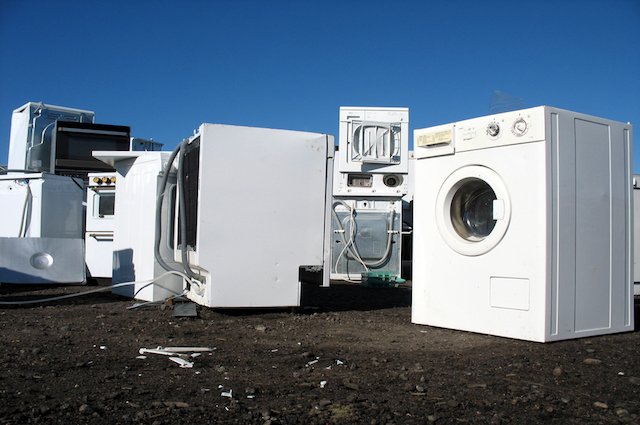
Every month you keep an appliance past its service life, you are paying a hidden tax on your electricity bill. Call (604) 239-3084 to find out what your old appliances are actually costing you.
Do Old Appliances Really Cost You More? When to Replace vs. Repair
If you have been quietly wondering why your electricity bills keep creeping up despite no obvious change in your habits — your appliances may be the answer. Not in a dramatic, sparks-flying way. Just quietly, month after month, drawing a little more than they should. The older they get, the worse it becomes.
This is one of those topics where the math genuinely surprises people. Most homeowners focus on turning off lights or shortening showers when looking to reduce their bills. Both are worthwhile habits. But an aging refrigerator running 20–66% over its optimal consumption, or a washing machine that runs inefficient long cycles — those are the real drivers. This guide gives you the numbers, the service life benchmarks, and a clear framework for deciding what stays and what goes.
Do Old Appliances Really Consume More Energy?
Yes — and for reasons that compound over time. There are two separate issues happening simultaneously with aging appliances, and both push consumption upward.
The first is mechanical degradation. Components wear, seals fail, motors become less efficient. A freezer with a faulty door seal runs more cooling cycles than it needs to because cold air is escaping continuously. The freezer is working harder than the contents require — and you are paying for every extra cycle. This is true of virtually every appliance with moving parts, motors, or temperature regulation systems. (Your old fridge is not trying to punish you. It is just tired.)
The second issue is generational. Appliances manufactured 15 or 20 years ago were built to the energy standards of 15 or 20 years ago. Current Energy Star Canada certified appliances are substantially more efficient than what the same budget would have bought in the 2000s — not because manufacturers have become more ethical, but because regulations have raised the floor on what can legally be sold.
The refrigerator is the single biggest appliance contributor to high energy bills — because it runs 24 hours a day, 7 days a week, 365 days a year without a break. At the 10-year mark, a fridge is typically drawing around 20% more energy than its original rating. By 15 years, that gap is larger still. If your fridge is more than a decade old and your bills feel higher than they should be, the fridge is almost certainly contributing. Call us for an assessment: (604) 239-3084
Can You Save a Considerable Amount of Money by Replacing Old Appliances?

The short answer is yes — and for several appliance categories, the savings are substantial enough to justify replacement purely on financial grounds, independent of reliability concerns. Here is how the major categories compare:
Televisions
Old CRT and early flat-panel televisions were among the highest energy consumers in a household. Modern LED and OLED displays use a fraction of the power for significantly better picture quality. If your television is from the pre-2010 era, the energy savings from replacement are real and ongoing.
✓ ~50% less energy vs. older modelsWashing Machines & Dryers
Modern washing machines have transformed the laundry equation. Shorter cycle times, cold-water efficiency, high-speed spin cycles that remove more water before drying, and humidity-sensing dryers that stop automatically when clothes are actually dry — each feature reduces energy consumption per load. Older separate washer-dryer combinations simply cannot compete.
✓ Significantly fewer kWh per loadRefrigerators
This is the highest-impact replacement you can make. Older refrigerators consume up to 66% more energy than current energy-efficient models. Features like automatic defrost, better compressor technology, and improved door sealing mean the new unit simply works less hard to maintain the same temperature. The payback on a new energy-efficient fridge can be measured in years, not decades.
✓ Up to 66% less energyLighting
Old incandescent bulbs convert roughly 10% of their energy into light — the remaining 90% becomes heat. LED bulbs produce the same or better light output at a fraction of the wattage. This is the easiest and cheapest upgrade on this list, and it pays back almost immediately. If you still have incandescent bulbs in any fixture, the case for switching is straightforward. Our LED retrofit service →
✓ Up to 80% less energy vs. incandescentBC Hydro's PowerSmart rebate program offers financial incentives on qualifying energy-efficient appliances — including refrigerators, washing machines, and other major appliances. The rebate can meaningfully offset the upfront cost of replacement. Check current availability before purchasing a replacement appliance. Our electricians can advise on which upgrades qualify when they assess your home. Call us: (604) 239-3084
How Long Should You Wait Before You Replace Your Appliances?

These service life benchmarks are based on typical usage under reasonable maintenance conditions. Heavy use, lack of servicing, or a fault left unrepaired will shorten these windows. Regular professional maintenance can extend them slightly. Use these as a guide — not a guarantee.
| Appliance | Typical Service Life | Action if Past This Age |
|---|---|---|
| Furnace | Up to 15 years | Plan replacement |
| Air Conditioner | Up to 15 years | Plan replacement |
| Electric Range | Up to 13 years | Monitor and plan |
| Dryer | Up to 13 years | Monitor and plan |
| Refrigerator | 10–13 years | Replace — energy costs rising |
| Washing Machine | Up to 10 years | Replace if issues present |
| Water Heater | Up to 10 years | Replace promptly |
| Dishwasher | Up to 9 years | Replace |
| Microwave Oven | Up to 9 years | Replace |
Appliances rarely announce their retirement. More often, they quietly degrade — costing you more on your electricity bill every month while technically still running. By the time they actually stop working, they have already extracted a significant financial penalty through elevated consumption. If your appliances are at or past these benchmarks, the cost of waiting is not zero. Call us: (604) 239-3084 — we can assess what your appliances are actually drawing and help you decide what makes financial sense to replace now.
Repair or Replace — How to Decide
This is the question that actually matters — and the honest answer is that it depends on three things: the age of the appliance relative to its service life, the cost of the repair relative to the cost of replacement, and how much the appliance is currently costing you in excess energy consumption.
-
Replace if: the appliance is at or past its typical service life, the repair would cost more than 50% of a replacement, or your energy bills suggest it is running significantly over its rated consumption. A one-time investment in a modern, energy-efficient replacement will pay dividends for years. Every month you delay is a month you pay the inefficiency tax.
-
Repair if: the appliance is well within its service life, the fault is straightforward and inexpensive to fix, and there is no evidence of significant energy overconsumption. Not every fault means the appliance is done — a failed component in a relatively young unit is worth fixing.
-
Get an assessment first if: you are unsure. A licensed electrician can check whether your appliances are drawing more than their rated wattage, identify the specific fault, and give you an honest read on remaining useful life. That information makes the repair-or-replace decision much easier — and removes the guesswork from what can be a significant purchase. Our troubleshooting service →
Replacing all aging appliances at once is rarely practical — and not necessary. The highest-impact approach is to prioritize the appliances running 24/7 (refrigerator, water heater) and those with the largest per-use energy draw (washing machine, dryer). Replace these first and the bill reduction will fund the next round. In the meantime, regular maintenance — cleaning coils, checking seals, servicing motors — can slow the efficiency decline in the appliances you are keeping. Our electricians can advise on which maintenance interventions are worth doing and which are not. Call us: (604) 239-3084
Related services from our team:
Related reading: Why LED Lighting Upgrades Are Worth the Switch | Slash Your Lighting Costs by Up to 70% with BC Hydro Rebates | Efficient Heating Solutions: Electrical Heat Pumps and Smart Thermostats | Is Your Home's Electrical System Ready for a Heat Pump?
↑ Back to topFind Out What Your Old Appliances Are Costing You — Before Next Month's Bill
Our licensed electricians can assess which appliances in your Vancouver or Lower Mainland home are drawing more than they should — and help you decide what to replace now vs. later. Don't keep paying the inefficiency tax.
Serving All of Greater Vancouver
Common questions about old appliances, energy bills, and when to replace vs. repair — answered by our licensed Vancouver electricians.