
Reasons Why Your House Needs A Ceiling Fan Installation
Summer is arriving faster than BC Hydro bills go up. A ceiling fan installed now means lower AC costs for the next four months — and the next decade. Call Kato Electrical: (604) 239-3084 — book your installation before the summer queue fills up.
9 Reasons a Ceiling Fan Is One of the Smartest Home Upgrades You Can Make
Air conditioning cools a room. A ceiling fan makes a room feel cool — and those are not the same thing, particularly when you look at the electricity bill at the end of the month. A ceiling fan running at maximum speed draws less power than a 100-watt light bulb. An air conditioner does not.
Ceiling fans have evolved considerably from the wobbling, noisy fixtures of previous decades. Today's options are well-designed, quiet, energy-efficient, and available in styles that complement rather than compete with a room's aesthetic. Our electricians at Kato Electrical install ceiling fans across Vancouver and the Lower Mainland regularly — and the difference they make to a home's comfort and energy bills is consistently noticeable. Here is the full case for them.
1. Even Temperature Distribution
Your AC Works Better When a Fan Helps It
Air conditioning cools the air it touches, but that cooled air does not distribute itself evenly through a room on its own. Hot air stays near the ceiling, cooled air pools near the floor, and the thermostat ends up working harder than it needs to trying to average out the difference. A ceiling fan circulates that air continuously, spreading the cooled air through the full volume of the room.
The result is a more consistent temperature throughout the space — and a thermostat that does not have to run the compressor as often to maintain it. In multi-room homes, distributing fans across rooms means each space maintains its comfort independently, without forcing the entire HVAC system to compensate for one hot room.
2. Lower Electricity Bills
The Energy Math Is Surprisingly Compelling
At maximum speed, a ceiling fan draws less wattage than a standard 100-watt incandescent bulb. A central air conditioner draws anywhere from 3,000 to 5,000 watts for the same period. Running a ceiling fan to supplement or partially replace air conditioning use in moderate weather does not just slightly reduce your bill — according to Natural Resources Canada, ceiling fans can reduce cooling costs by up to 47% compared to relying on air conditioning alone.
In winter, the reverse mode has a similar proportional effect on heating costs. By redistributing warm air that collects near the ceiling, the heating system runs shorter cycles to maintain the same temperature — which BC Hydro estimates at around 10% savings on heating use. Over a full year, across both seasons, the savings add up considerably more than the cost of the fan or its installation.
3. Better Lighting in Every Room
Two Problems, One Fixture
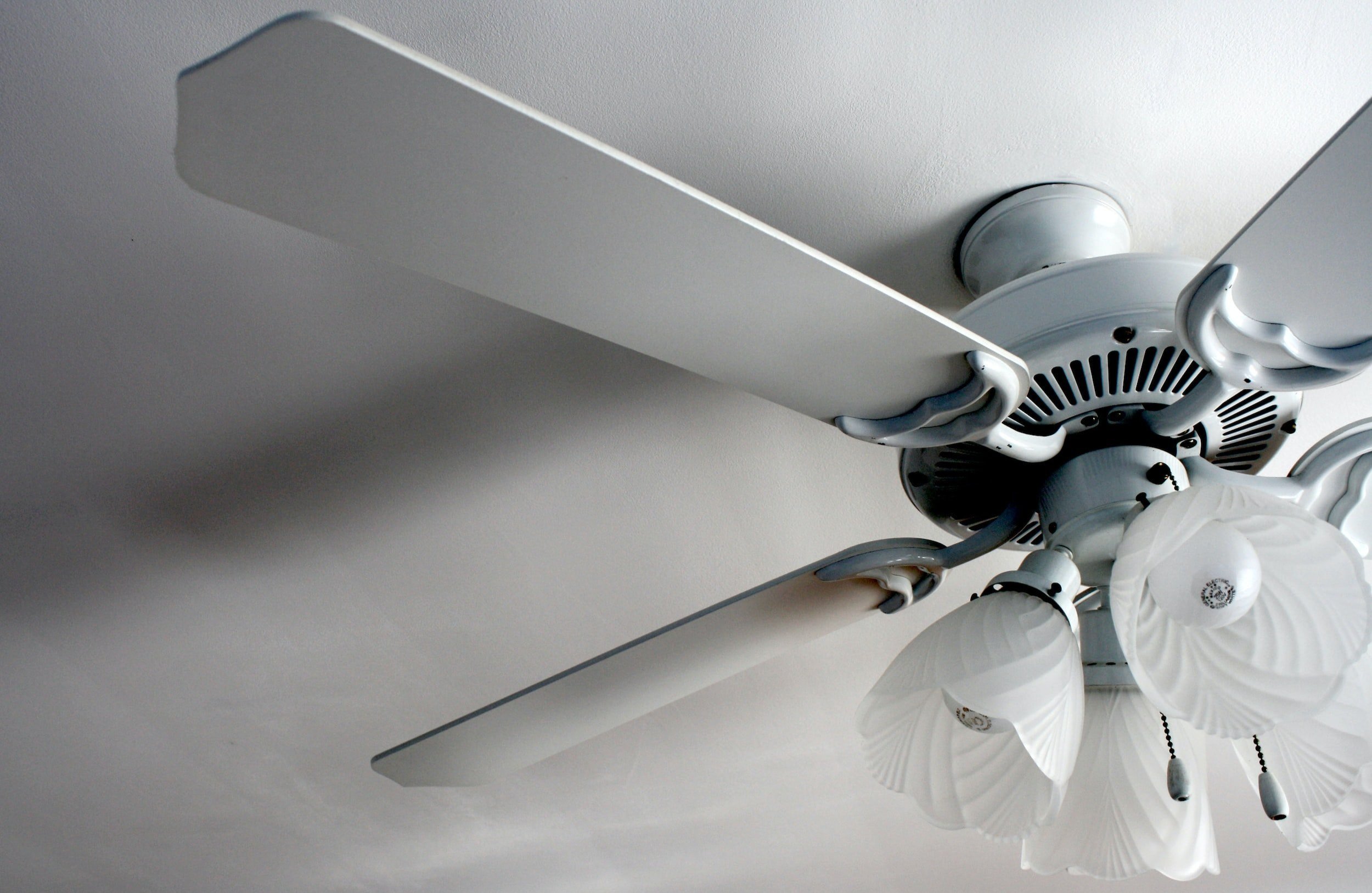
Many ceiling fans include light kits — integrated lighting fixtures that sit directly below the fan motor. In rooms where overhead lighting has historically been limited to a single central fixture, a ceiling fan with a multi-bulb light kit can transform the brightness and quality of illumination significantly.
Modern ceiling fan light kits typically use LED bulbs and often include dimmable options. This is genuinely useful for spaces that serve multiple purposes — a bedroom that needs bright light for reading and soft light for winding down in the evening, or a living room that shifts between daytime function and evening atmosphere. Two fixtures replace one, and the overhead space is used more efficiently. The ceiling fan is doing the work of an electrician, an HVAC engineer, and an interior designer simultaneously. (A rare triple threat.)
4. Style and Design Flexibility
The Utility Appliance That Actually Looks Good
The design range for ceiling fans has expanded considerably. Brushed nickel, matte black, walnut, soft white, bronze, and polished chrome — the finish options are extensive. Blade materials range from hardwood to polycarbonate to metal, and blade shapes from traditional wide paddles to slim contemporary profiles to the genuinely sculptural. Outdoor fans designed to look at home on covered patios are available in finishes that complement natural surroundings.
In an air-conditioned room, the cooling source is invisible. In a ceiling-fan room, the cooling source is a feature. That distinction is part of why ceiling fans are increasingly common in premium residential spaces — a well-chosen fan contributes to the aesthetic of the room rather than just existing in it.
5. Year-Round Functionality
A Single Investment That Works in Both Directions
Unlike air conditioning, which is a summer-only appliance, a ceiling fan provides value in every season. The direction switch — counter-clockwise for summer, clockwise for winter — makes it a year-round tool for managing comfort and energy costs rather than a seasonal fixture that sits idle for half the year.
This is particularly relevant in Vancouver, where the temperature range between summer peaks and winter lows means a home needs to manage both cooling and heating. A ceiling fan installed now is not a summer purchase — it is a year-round energy management tool that starts paying back from day one of installation.
6. Versatile Sizing for Every Space
There Is a Fan for Every Room — Including the Ones You Would Not Expect
Ceiling fans are sized by blade span and matched to room dimensions. Small fans for bathrooms and compact bedrooms, medium fans for standard living rooms and master bedrooms, large fans for great rooms and open-plan spaces. Fans designed for high ceilings have canopy systems that accommodate the extended drop rod needed to position the blades at the right height.
A small ceiling fan in a large master bathroom does more than circulate air — it removes humidity effectively, which is genuinely useful in Vancouver's damp winters. A fan with an industrial design in a home gym keeps the space ventilated during workouts without requiring a wall-mounted unit. The right fan for the right space is a more considered decision than most people realize.
7. Environmental Benefits
Lower Consumption, Lower Carbon Footprint
The environmental case for ceiling fans follows from the energy case. Less electricity used for the same comfort outcome means less demand on the grid — and in BC, where a significant portion of electricity is hydroelectric, the relationship between consumption and environmental impact is direct. Reducing HVAC use with ceiling fans lowers your household's carbon footprint in a measurable and ongoing way.
Outdoor ceiling fans have the additional benefit of not requiring the ductwork, refrigerant, and compressor infrastructure of air conditioning — components that have their own environmental impact in manufacture and disposal. A ceiling fan's environmental cost across its lifecycle is considerably lower than an equivalent cooling output from a central air system.
8. Outdoor Use
The Patio, the Deck, the Covered Dining Area
Outdoor ceiling fans — rated for wet or damp conditions — transform covered outdoor spaces from seasonally uncomfortable to genuinely pleasant. On a warm Vancouver evening, a patio fan makes the difference between everyone retreating indoors and actually using the outdoor space the home's design intended. They also serve a secondary function that outdoor entertaining enthusiasts appreciate: the airflow discourages insects from settling in the space.
The key distinction to understand is wet-rated versus damp-rated. Wet-rated fans are designed for exposed outdoor areas that receive direct rainfall. Damp-rated fans are for covered outdoor spaces where rain does not directly contact the fan. Standard indoor fans should never be used outdoors — the motor and blade materials are not built for it, and the safety implications are real.
9. Low Maintenance
Wipe It Down Twice a Year and Call It Maintained
Air conditioning requires annual servicing, refrigerant checks, filter replacements, and duct cleaning. A ceiling fan requires a soft cloth and a step ladder, roughly twice a year, to remove the dust that accumulates on the blade surfaces and housing. That is the maintenance schedule.
The choice of blade material influences cleaning somewhat — hardwood blades suit living rooms and bedrooms aesthetically, while polycarbonate and metal blades are more practical for kitchens, bathrooms, and areas where moisture or grease might be present. Either way, the maintenance demand of a ceiling fan is negligible compared to any HVAC equivalent. A fan that is cleaned regularly also runs more efficiently — dust on the blades reduces their aerodynamic effectiveness and puts slightly more load on the motor.
Choosing the Right Fan Size for Your Space
Getting the blade span right matters more than most people realize. A fan that is too small for the room barely moves the air; a fan that is technically oversized for the space is not harmful but is often unnecessary cost. Use this as your starting reference:
| Room Size | Blade Span | Typical Applications |
|---|---|---|
| Up to 75 sq ft | 29–36 inches | Small bathrooms, compact bedrooms, closets |
| 76–144 sq ft | 36–42 inches | Standard bedrooms, small dining rooms |
| 145–225 sq ft | 44 inches | Master bedrooms, medium living rooms |
| 226–400 sq ft | 50–54 inches | Large living rooms, open-plan spaces |
| 400+ sq ft | 60+ inches or multiple fans | Great rooms, large open-concept areas |
The most common sizing mistake we see is a fan that is too small for the room — usually because the homeowner picked aesthetics over dimensions. The fan looks great and moves essentially nothing. Before you order, measure the room's diagonal and choose a fan that matches the size guide above. If the room is unusually tall, factor in a longer drop rod to position the blades at the right height. We can advise on both during the installation booking. Call us: (604) 239-3084
Related services from our team:
Related reading: Efficient Heating Solutions: Heat Pumps and Smart Thermostats | Why LED Lighting Upgrades Are Worth the Switch | Your Guide to Home Automation Systems
↑ Back to topReady to Install a Ceiling Fan in Your Vancouver Home?
Our licensed electricians handle ceiling and bathroom fan installation across the Lower Mainland — indoor, outdoor, smart-controlled, and everything in between. Book before summer hits.
Serving All of Greater Vancouver
Common questions about ceiling fans — answered by our licensed Vancouver electricians.