
Brighten Up Your Vancouver Home: A Guide to Better Lighting
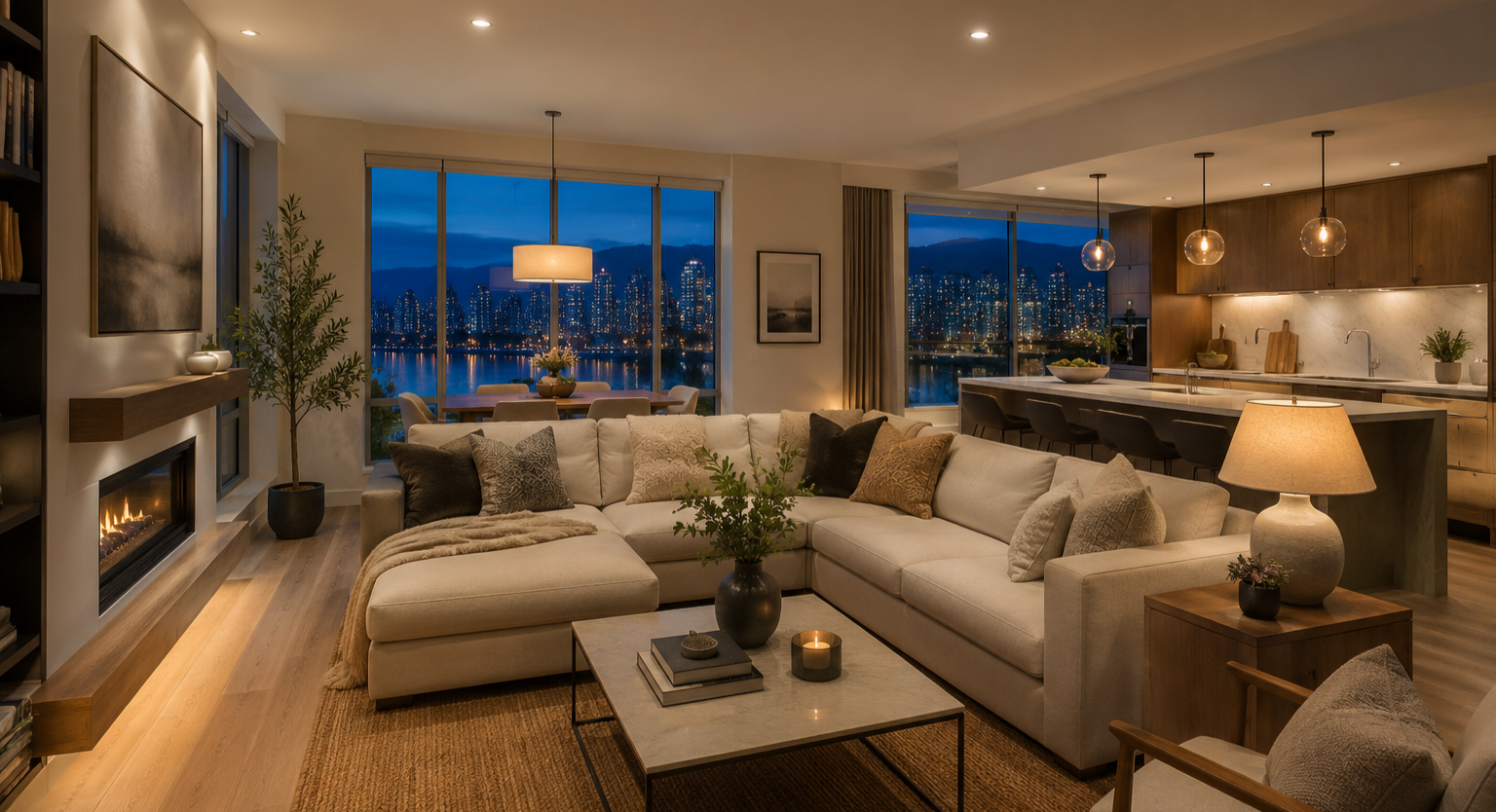
Warm layered lighting in a Vancouver living room installed by Kato Electrical
Kato Electrical — Licensed, Insured Electricians serving Vancouver and the Lower Mainland since 2015.
If you've spent a winter in Vancouver, you know what it's like to leave for work in the dark and come home in the dark. Between November and February, we're lucky to see eight hours of daylight, and most of those hours are filtered through cloud cover. Good lighting isn't a luxury here — it's how you keep your home feeling warm, safe, and livable through the rainy months. At Kato Electrical, lighting is one of the most common upgrades our customers ask about, and it's also one of the projects where a little planning makes a huge difference. After 10 years and + lighting installations across the Lower Mainland, here's what we wish every Vancouver homeowner knew before changing a fixture or planning a renovation.
Why Lighting Matters More Than You Think
Lighting affects three things at once: how a space looks, how it feels, and how it works. A kitchen with a single ceiling fixture might be technically "lit," but try chopping onions on a counter that's in your own shadow and you'll understand why layered lighting exists. Good lighting also has real effects on mood and energy. Vancouver's grey season is genuinely tough on people, and the right colour temperature in your living areas can make your home feel noticeably brighter even on a soaking February afternoon. And of course, there's safety. Poorly lit stairs, walkways, and entries are accident hazards. Outdated wiring behind decorative fixtures can be a fire risk. Replacing a 40-year-old fluorescent panel isn't just an aesthetic decision — it's often an overdue safety upgrade.
The Three Layers Every Room Needs
Professional lighting design comes down to combining three types of light in the same space:
**Ambient lighting** is your general, fill-the-room light. Recessed pots, flush mounts, and chandeliers usually fall into this category. It sets the baseline brightness.
**Task lighting** is focused light for specific activities — under-cabinet strips for food prep, pendants over a kitchen island, a reading lamp beside your favourite chair, vanity lighting at the bathroom mirror.
**Accent lighting** Picture lights, wall sconces, toe-kick lighting under cabinets, or directional spots highlighting artwork or architectural features.
The mistake we see most often is relying on a single overhead fixture to do all three jobs. It can't. That's why your living room feels harsh when the main light is on and gloomy when it's off — there's nothing in between.
LEDs: Worth Doing Right
If your home still has incandescent or halogen bulbs, switching to LED is one of the highest-return upgrades available. With BC Hydro rates climbing in recent years, LEDs use roughly 75% less energy than incandescents while lasting 15 to 25 times longer. BC Hydro also occasionally offers rebates on qualifying lighting and home electrical upgrades — worth checking before you start a larger project. But not all LEDs are equal, and the cheap bargain-bin bulbs are often where homeowners get frustrated. A few things to look for:
- **Color temperature** matters. For living areas, bedrooms, and dining rooms, look for 2700K to 3000K (warm white). For kitchens, bathrooms, garages, and workshops, 3500K to 4000K (cool white) reads as cleaner and more functional. Avoid mixing temperatures in the same room — it looks off, even if you can't quite say why.
- **CRI (Colour Rendering Index)**. Look for CRI 90 or higher, especially in kitchens, bathrooms, and any room where you choose clothes or apply makeup.
- **Dimmability** is not automatic with LEDs. Check the packaging, and make sure your dimmer switches are LED-compatible — older dimmers designed for incandescent loads often cause flickering or buzzing. If you're doing a full retrofit, it's also worth checking whether your existing fixtures can handle modern bulbs safely. Older recessed cans without IC ratings can overheat, and we occasionally find concealed damage when we open them up.
Vancouver-Specific Considerations
A few things come up often in our market that wouldn't necessarily matter in a drier climate.
Outdoor and covered-patio fixtures
need to be rated for wet locations, not just damp. Our rain blows sideways for half the year, and a fixture rated for a covered porch in Phoenix is not the same fixture you want under your eaves in Kerrisdale. Look for "wet location" listings and stainless or marine-grade hardware.
Heritage homes in Neighborhoods like Kitsilano, Mount Pleasant, Strathcona, and the West End
often have knob-and-tube wiring, ungrounded circuits, or original panels that simply weren't designed for modern lighting loads — let alone smart switches, LED drivers, and connected fixtures. Before planning a major lighting upgrade in an older home, it's worth having an electrician confirm your existing wiring can support it safely.
Pot light installation in older ceilings
sometimes runs into insulation, vapor barrier, or structural surprises. We always recommend a site visit before promising a specific layout — what works on paper doesn't always work in the joists.
Strata buildings
in Vancouver typically have rules about exterior fixtures, balcony lighting, and any work that affects common walls or ceilings. Check with your strata council before booking a job.
Smart Lighting: Useful, but Be Strategic
Smart bulbs and switches have come a long way. Done well, they let you set scenes, automate exterior lighting around sunset, and control everything from your phone or a voice assistant. Done poorly, they're a tangle of three different apps, bulbs that lose connection to the hub, and switches that confuse house guests. Our advice: pick one ecosystem, prioritize hardwired smart switches over smart bulbs where possible (so the wall switch still works the way people expect), and don't smart-ify rooms where you'd never actually use the features.
When to Call a Licensed Electrician
Swapping a bulb is a DIY job. So is replacing a like-for-like fixture if you're comfortable working with the breaker off and you know what you're looking at. Call a licensed electrician when:
- You're adding new fixtures or circuits, not just replacing them
- You're installing , under-cabinet lighting, or anything that involves cutting into ceilings or walls
- Your panel is at or near capacity
- You're working in an older home with unknown wiring
- Outdoor lighting needs to be wired through exterior walls
- Anything involves a permit — in BC, most electrical work beyond like-for-like fixture replacement requires a permit through.
A botched lighting install is one of the most common things we get called to fix, and the repair almost always costs more than doing it right the first time. Hiring a licensed electrician also keeps your home insurance valid — most policies require electrical work to be done by a certified Field Safety Representative (FSR) and properly permitted.
Frequently Asked Questions
Do I need a permit to install pot lights in Vancouver?
In most cases, yes. Installing new recessed lighting typically involves adding to or modifying existing circuits, which requires a permit through Technical Safety BC. A licensed electrician will pull the permit as part of the job.
How much does it cost to install recessed lighting in a Vancouver home?
Costs vary depending on ceiling type, insulation, existing wiring, and the number of lights. We're happy to provide a free quote after a site visit.
Can I replace a light fixture myself in BC?
A like-for-like swap of a hardwired fixture is generally allowed for homeowners on their own property, as long as the breaker is off and the work is done safely.
What's the best LED color temperature for living rooms?
2700K to 3000K (warm white). It mimics the color of traditional incandescent bulbs and feels comfortable in spaces where you relax. Save the cooler 3500K–4000K range for kitchens, bathrooms, and workspaces.
How long do LED bulbs actually last?
Quality LEDs are rated for 15,000 to 50,000 hours of use, which works out to roughly 15 to 25 years at typical residential use. Cheap LEDs often fail far earlier, usually because of poor heat management or low-quality drivers.
Does Kato Electrical service my neighborhood?
We serve Vancouver, Burnaby, North Vancouver, West Vancouver, Richmond, and most of the Lower Mainland.
Ready to Light Things Up?
Whether you're planning a full kitchen renovation, finally tackling that gloomy hallway, or just want your home to feel less like a cave this winter, we'd love to take a look. Kato Electrical is fully licensed, insured, and bonded in British Columbia, and every job we do is permitted through Technical Safety BC where required.
Call us at 604 256 6443 for a free, no-obligation quote.
Same-week appointments available for most of the Lower Mainland.