
Electrical Outlets: Things You Should Know About
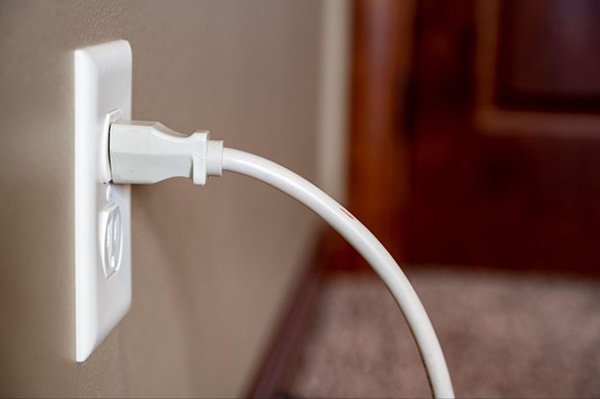
A warm outlet or a burning smell from a plug socket is not a "keep an eye on it" situation. Call Kato Electrical: (604) 239-3084
Electrical Outlets: Things You Should Know About
A homeowner in Dunbar had a dead outlet behind the couch for two years. She knew about it. She had the other outlet in the room, and the lamp worked fine on that one, so the dead one just... stayed dead. Behind the couch. Out of sight. Then the lamp stopped working. She pulled the couch out, looked at the outlet, and found a scorched cover plate, a faint smell she couldn't quite place, and a wire that had worked itself loose from its terminal some time ago — probably around the same time she'd noticed the outlet stop working and decided not to deal with it.
The repair was straightforward. What wasn't straightforward was how long it had been sitting there quietly overheating, mostly behind a piece of furniture she moved twice a year at most.
We've replaced, upgraded, and installed electrical outlets across Metro Vancouver for over twenty years — from two-prong ungrounded outlets in 1950s Kerrisdale homes to USB-C smart outlets in new Brentwood condos. What consistently surprises us is how little most homeowners know about the things they touch every single day. Outlets are the most interacted-with part of your home's electrical system and, reliably, the most ignored. That's what this is for.
The Short Answer
Electrical outlets are not all the same — different types exist for different locations, circuit ratings, and safety requirements. Many Vancouver homes have outdated outlet types that don't meet current BC Electrical Code. If your outlet has suddenly stopped working, the most common cause is a tripped GFCI outlet somewhere else in the house — check those before assuming anything is broken. Some outlet problems are homeowner-fixable. Many aren't. The difference usually comes down to whether the issue is at the outlet face or behind it — and anything behind the face is a licensed-electrician call.
Types of Electrical Outlets

Here is what's actually on your walls — and what each type means for you.
Standard 15-Amp Outlet (Type A)
The most common outlet in Canadian homes — the one you interact with dozens of times a day without thinking about it. In homes built before roughly 1960, you'll often find the two-prong version: no round grounding hole, just two slots. In homes built after, three-prong grounded outlets are the standard. The third prong — the round one — connects the outlet's metal components to the grounding system, providing a safe path for fault current rather than through you or your appliances.
Two-prong outlets aren't automatically dangerous in the immediate sense — but they provide no grounding protection, which matters when you're running sensitive electronics through them. If your home has two-prong outlets throughout, that's a conversation worth having. We cover this in detail in the dedicated section below.
20-Amp Outlet
Visually almost identical to a 15-amp outlet, with one difference: a horizontal slot on one side of the vertical slot — a sideways T configuration. That small slot difference tells you the outlet is rated for 20 amps rather than 15. Where are 20-amp outlets required? Kitchens (required within 1.5 metres of the sink), laundry rooms, bathrooms, garages, and anywhere high-draw appliances run continuously.
Here's what trips people up: you cannot simply swap a 15-amp outlet for a 20-amp outlet without confirming the circuit is wired with 12-gauge wire and protected by a 20-amp breaker. The outlet rating has to match the circuit rating. A 20-amp outlet on a 15-amp circuit — with 14-gauge wiring — is a code violation and a potential overload waiting to happen.
GFCI Outlet (Ground Fault Circuit Interrupter)
The outlet with the TEST and RESET buttons. A GFCI monitors the current flowing out and back on its circuit — the values should be equal. When they diverge, it means current is leaving through an unintended path, which in a bathroom context means through water, a person, or both. The GFCI trips in milliseconds — fast enough to prevent electrocution in most scenarios. Under BC Electrical Code, GFCI protection is required in bathrooms, kitchens within 1.5 metres of a sink, garages, outdoor outlets, unfinished basements, and crawl spaces.
Here's the thing most people don't know: a single GFCI outlet can protect multiple outlets wired downstream on the same circuit. This means the dead outlet in your bathroom might be failing because a GFCI in the garage — which you've never once looked at — tripped last Tuesday. We find this scenario in Vancouver homes regularly. Before assuming anything is broken, check every GFCI outlet in the house and look for any that have tripped. (Someone, somewhere in Vancouver, has an entire bathroom running off a GFCI outlet in the garage they discovered existed only when both stopped working simultaneously.)
The RESET button that won't stay reset is a different problem. It means the GFCI is detecting an ongoing fault condition. In that case, pressing reset repeatedly is not the fix. That's a Kato call.
AFCI Outlet (Arc Fault Circuit Interrupter)
Less familiar than GFCI but increasingly required. An arc fault is what happens when electrical current jumps across a gap — through damaged insulation, between a nail and a stapled wire, at a loose connection that's been vibrating for years. Arc faults generate heat and can ignite surrounding material without tripping a standard breaker, because the current level stays within the breaker's tolerance even as something burns inside your wall.
AFCI protection detects the distinctive electrical signature of an arc and trips before the arc can cause damage. Under the current BC Electrical Code, AFCI protection is required in new construction for bedrooms, living areas, hallways, and other occupied spaces. AFCI can be implemented at the breaker level (an AFCI breaker in the panel) or at the outlet level — both accomplish the same protection for the circuit.
240V Outlet (Dryer, Range, EV Charger)
These outlets look physically different from everything else on this list — larger, with a distinct slot configuration that varies by application. A dryer outlet, a range outlet, and an EV charger outlet each have different configurations to prevent mismatched connections. All of them operate at 240 volts rather than the standard 120V, and all of them require a dedicated circuit rated for the specific load.
This is categorically not a homeowner permit job. Adding a 240V outlet — for any purpose — requires running new wiring from the panel, installing a double-pole breaker, and having the work permitted and inspected through Technical Safety BC. The panel needs to have capacity for the additional load. In older Vancouver homes, this often means a panel upgrade first. Our dedicated circuit installation service →
USB and Smart Outlets
USB outlets replace a standard outlet face with a combination of regular plug slots and USB charging ports — no adaptor needed, the charging circuitry is built into the outlet. USB-A ports are the older rectangular type; USB-C ports are the newer oval type and charge faster. Most modern USB outlet installations include both.
The upgrade is straightforward in homes with modern wiring and a neutral wire at the outlet box — which most post-1980 Vancouver homes have. In older homes, particularly those with aluminium wiring or ungrounded circuits, the situation is more complex. Smart outlets (which can be controlled by phone app or voice assistant) also require a neutral wire to power the device's electronics even when the outlet is "off." Check the outlet box wiring before buying a smart outlet. We've seen people purchase smart outlet packs and discover their 1965 home doesn't have neutrals at the switch boxes — an entirely separate conversation.
Tamper-Resistant Outlets (TR)
Required in BC for new construction and renovations in homes where children are present. TR outlets have spring-loaded shutters inside the slots that only open when equal pressure is applied to both sides simultaneously — meaning a plug inserted correctly opens them, but a child pushing something into a single slot cannot. Look for the "TR" marking on the outlet face. Worth installing in any home with young children, regardless of whether the renovation technically requires it. The cost difference over a standard outlet is minimal.
Outdoor and Weatherproof Outlets
"Weatherproof" and "in-use cover" are not the same thing. A standard weatherproof cover protects the outlet when nothing is plugged in. An in-use cover has a hinged flip lid that protects the outlet even with a cord plugged in — and that's what BC Electrical Code requires for outdoor outlets where cords will be left connected. All outdoor outlets must be GFCI protected. They must also be mounted on a weatherproof box, sealed to the exterior surface, and on a circuit that doesn't share with interior loads in a way that creates problems when the GFCI trips.
The outdoor outlet we see most often during inspections: a standard indoor outlet mounted near a back door with no weatherproof cover, no GFCI protection, and a power cord running through a barely-closed door. This is a combination of code violations and a Vancouver winter waiting to cause a problem.
Why Is My Outlet Not Working?
This is the most searched question in this topic and the one with the most straightforward first answer. Work through these in order before assuming anything is seriously wrong.
🔴 Cause 1: A Tripped GFCI Outlet Somewhere Else on the Circuit
This is the cause of most suddenly-dead outlets in Vancouver homes, and it surprises people every time. GFCI outlets protect not just themselves but every outlet wired downstream on the same circuit. When a GFCI trips in the garage, all the outlets it protects — including potentially the ones in your bathroom, kitchen, or outdoor area — go dead too. Check every GFCI outlet in the house, press RESET on any that have tripped, and see if your dead outlet comes back. This solves the problem more often than anything else.
🟡 Cause 2: A Tripped Circuit Breaker
Check your electrical panel. A tripped breaker sits in the middle position — not fully ON, not fully OFF — which is why "it looks like it's on" is a thing we hear regularly. Move it firmly to OFF first, then back to ON. If it trips again immediately or within seconds of plugging something in, there's an ongoing fault or overload on the circuit. That's a different problem than a one-time trip. Our circuit breaker service →
🟠 Cause 3: A Loose or Failed Connection Inside the Outlet
Outlets are mechanical devices. Terminal screws loosen over years of thermal cycling and use. A marginal connection can result in an outlet that works intermittently — fine with a light load, dead under anything heavier — or in one that works until a plug is jiggled and then stops. Signs that point to a connection issue: the outlet feels slightly warm, plugs don't sit firmly, there's an occasional crackling sound when plugging in, or there's a faint smell you can't quite identify. This is not a DIY investigation — once you're behind the cover plate, you're in licensed-electrician territory in BC.
🟡 Cause 4: The Outlet Is Simply Worn Out
Outlets have a service life. After years of use, the internal contacts wear down — plugs no longer grip firmly, connections become unreliable, and the outlet starts to misbehave. If plugs fall out easily, if the outlet stops gripping even standard plugs, or if it's visibly discoloured or cracked, it's past its useful life. Like-for-like replacement of a worn outlet on an existing circuit is within homeowner scope in BC without a permit — with all the safety precautions we cover in our DIY electrical wiring article.
🔴 Cause 5: Faulty Wiring Behind the Outlet
The outlet that looks dead but is actually the surface symptom of something bigger. Signs that suggest this is the cause: other outlets on the same circuit are also behaving strangely, there's discolouration around the cover plate (indicating heat), or there's any burning smell. Do not continue investigating this yourself.
A burning smell from an outlet — however faint — is not a "keep an eye on it" situation. It means insulation is degrading or a connection is arcing inside the wall. Turn off the circuit at the breaker and call a licensed electrician before using that circuit again. The Dunbar homeowner's scorched outlet cover was the visible result of something that had been happening invisibly for a long time. Don't wait for visible evidence. Call us: (604) 239-3084
If your outlet won't reset, feels warm, smells like anything at all, or has been dead for longer than you've been meaning to deal with it — that's a Kato call. Don't leave it another week. Call us: (604) 239-3084
Two-Prong Outlets in Vancouver Homes — What You Need to Know
If your Vancouver home was built before 1960, there's a very good chance it still has two-prong outlets in some or all rooms. This is genuinely common across older neighbourhoods — Kitsilano, Dunbar, Kerrisdale, Strathcona, East Van, the West End. The outlets work. You can plug things into them. And they have no grounding protection at all.
What "ungrounded" means in practice: without a ground wire, any fault current in an appliance's casing has nowhere safe to go — so it distributes through the casing, through whatever's touching it, and through anything else conducting enough to carry it. For a lamp, the risk is low. For a computer, television, or appliance with sensitive electronics, the risk is a surge event that has no safe dissipation path. For anyone touching a faulted appliance, the risk is more immediate.
Your Three Options
Option A — Full rewiring to add a ground conductor: The proper, complete solution. Running a grounding wire to every outlet in the home, tied back to the grounding system at the panel. Appropriate for a full rewiring project or when the home's wiring is being upgraded for another reason. Discussed alongside panel upgrades →
Option B — GFCI outlet replacement: The accepted BC Electrical Code alternative to full rewiring. Replace the two-prong outlet with a GFCI outlet. The GFCI provides shock protection without a physical ground conductor — it just monitors current flow and trips on a fault. The outlet must be labelled "GFCI Protected — No Equipment Ground." This is the practical solution for most pre-1960 Vancouver homes where running new grounding conductors throughout isn't feasible.
Option C — Three-prong adaptor: The little orange or white device that makes a three-pronged plug fit a two-prong outlet. Technically functional. Also technically doing nothing about the grounding problem. The adaptor makes the plug fit. It does not add grounding. Your electronics are no more protected after the adaptor than before it, and the sense of having sorted something when you haven't is arguably the most dangerous part of the arrangement. We'd suggest Option B instead.
Two-prong outlets get flagged on home inspections in Vancouver — every time, without exception. Insurers are increasingly noting ungrounded outlets in BC homes and some are adding conditions. If you're planning to sell or renew home insurance, knowing what you have and addressing it proactively is worth doing now rather than under time pressure. Our electrical inspection service →
If you're not sure what you have or what to do about it, Kato can assess your home and give you a straight answer.
How Many Outlets Does a Room Actually Need?
BC Electrical Code requires that in any room, no point along a wall should be more than 1.8 metres (6 feet) from an outlet. In practice, this means an outlet every 3.6 metres of wall space, roughly. A standard bedroom might have four to six outlets; a living room, four to eight depending on size and wall configuration.
Older Vancouver homes frequently have two outlets per room — one on each main wall, positioned wherever the original electrician decided. This was adequate for a home with a floor lamp and a radio. For a 2026 home with a television, a streaming device, a gaming console, a sound system, two phones charging, and a laptop, it is absolutely not adequate. The result is power bars everywhere — which we'll come to in the safety section.
Kitchen Outlet Requirements
Kitchens have specific requirements: at minimum two 20-amp small appliance circuits serving all countertop outlets, with outlets spaced so no point along the countertop is more than 90cm from an outlet. Refrigerators, dishwashers, and range hoods each need dedicated circuits. If your older Vancouver kitchen has one outlet over the counter and a power bar doing the rest of the work, it's significantly under-outletted by current code.
Home Office — Where Modern Homes Fall Short
Code-minimum outlet spacing was written before "working from home" meant a monitor, a laptop, three chargers, a desk lamp, a printer, and a space heater all running simultaneously from a power bar rated for a toaster. Home offices consistently have too few outlets for modern use. When we get calls about a home office circuit tripping repeatedly, the outlet count is almost always part of the problem. The fix is additional outlets on properly rated circuits — not a bigger power bar.
↑ Back to topOutlet Safety — What Vancouver Homeowners Get Wrong
Power Bars vs Surge Protectors
A power bar is a way of having more things plugged in. A surge protector is a device that protects those things from voltage spikes. These are different things. Most people own a power bar and believe they have surge protection. A power bar with no joule rating listed on the box is a power bar — it does nothing about surges. Your TV does not know the difference until it's too late.
This is covered in full in our power surge and surge protection article — worth reading alongside this one. The short version: whole-home surge protection at the panel is the meaningful protection, and point-of-use surge protectors (with joule ratings of 2,000+) are a supplement, not a substitute.
Overloading Outlets
A standard 15-amp outlet on a 15-amp circuit can deliver up to 1,800 watts of continuous load — with a safety margin, the practical working limit is around 1,440 watts (80% of rated capacity). A space heater alone draws 1,500 watts. A space heater plus a laptop plus a monitor on one outlet is above the circuit's rated continuous capacity. The breaker may or may not trip depending on the exact load and the breaker's calibration. The wiring heating up doesn't require the breaker to trip — it just requires sustained overcurrent, which your power bar full of things provides reliably.
Warm Outlets — Act Immediately
An outlet that feels warm to the touch is arcing, overheating, or has a failing connection generating heat. Warm outlets do not stay warm — they get warmer. Turn off the circuit at the breaker and call a licensed electrician. Do not continue using the outlet. Do not assume it will sort itself out. It will not.
The Extension Cord Trap
Extension cords are rated for temporary use. Running an extension cord as a permanent outlet substitute is a code violation and a fire risk — the cord degrades under sustained load, the insulation breaks down, and the heat generated has nowhere to go. If you find yourself relying on an extension cord permanently because there isn't an outlet where you need one, the answer is adding an outlet — not a longer or heavier extension cord.
↑ Back to topWhen Should You Upgrade Your Outlets?
The honest answer: sooner than most people do. Here are the clear triggers:
- Two-prong outlets throughout the home — particularly if you're running sensitive electronics or planning to sell
- Outlets that feel loose or don't hold plugs firmly — the contacts have worn out
- Discoloured or scorched outlet covers — evidence of past or ongoing overheating
- Home over 40 years old with original outlets — the devices themselves have a service life
- Renovation that changes how a room is used — new bathroom, home office, laundry relocation
- Adding EV charging — requires dedicated 240V outlet and circuit, always a licensed electrician job
- Insurance or home inspection flagging — addressing it proactively is better than under time pressure
- Simply wanting USB charging without adaptors accumulating in every room
Sometimes a request to upgrade outlets in an older Vancouver home leads to a conversation about the wiring behind them. When we open an outlet box in a pre-1960 home and find aluminium wiring, knob-and-tube, or two-wire ungrounded circuits, the scope of what's needed changes. We'll always tell you what we find before quoting anything additional. An electrical inspection tells you exactly where you stand →
Outlet Installation and BC Electrical Code — What Requires a Permit?
The short version:
- Like-for-like replacement of an existing outlet on an existing circuit — generally no permit required for a homeowner in BC. Same type, same amperage, same wiring configuration.
- Upgrading a two-prong outlet to a three-prong GFCI on an existing circuit — generally within homeowner scope without a permit, provided you don't change the circuit.
- Adding a new outlet anywhere — requires a permit and a licensed electrician. No exceptions in BC.
- Adding a 240V outlet — requires a permit, dedicated circuit, and licensed electrician. No exceptions.
- Any outlet work in a kitchen or bathroom — higher scrutiny; if the work changes the circuit configuration, a permit is required.
The full BC homeowner electrical permit details — what you can do, what you can't, and what happens if you skip the permit — are covered in our DIY electrical wiring article. Worth reading if you're planning any outlet work yourself. The short version from that article: the permit process is not complicated, and the consequences of skipping it when it's required are significantly more complicated. Technical Safety BC homeowner permit information →
Related services and reading:
We serve all of Greater Vancouver:
Real questions we hear from Vancouver homeowners — answered directly.
Outlets are the most touched part of your home's electrical system. The kettle, the phone charger, the television, the laptop, the lamp on the bedside table — all of it goes through your outlets, dozens of times a day, without a second thought. Which is exactly why they're the most ignored.
The outlet behind the couch that stopped working two years ago. The two-prong outlets throughout a Kitsilano home that have been meaning to be addressed since the last renovation. The bathroom outlet that trips every time someone uses the hair dryer and the workaround is just — not using the hair dryer in that bathroom anymore. These things accumulate. They're not urgent until they are.
The outlet you've been meaning to deal with isn't getting better on its own. And the one behind the furniture? It might be worth a look.
Kato's team is licensed, local, and won't make it more complicated than it needs to be.