
10 Things You Must Know About Baseboard heaters
10 Things You Must Know About Electric Baseboard Heaters
Electric baseboard heaters are one of those things most Vancouver homeowners don't think about — until winter hits and one stops working, or the electricity bill climbs unexpectedly. Used correctly, they are quiet, efficient, and genuinely comfortable. Used carelessly, they waste a surprising amount of money. Here is what our electricians want you to know before you buy, install, or adjust yours.
What Are Electric Baseboard Heaters?

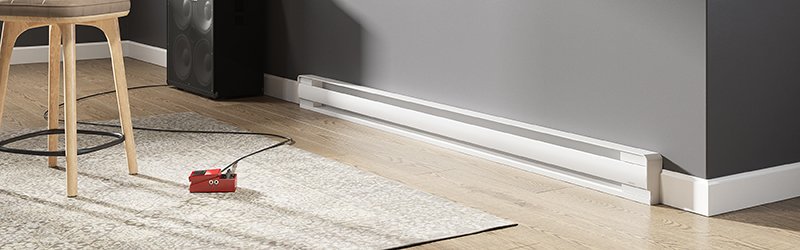
Electric baseboard heaters are a zone heating system — they heat one room at a time, rather than the whole house through a central furnace and duct network. A heating element runs along the inside of a slim unit mounted low on the wall, near the floor. Cold air settles at floor level, gets drawn into the unit, passes over the heated element, and rises back into the room as warm air. No ducts. No gas. No fan required.
That simplicity is both their strength and the reason a lot of people underuse them. Because they work with basic physics — warm air rises, cold air sinks — placement and maintenance matter more than most people realize. Get those right, and a baseboard heater is one of the most reliable heating solutions available. Get them wrong, and you're heating a room inefficiently while paying more than you should.
Electric vs. Hydronic — Which Do You Have?
Most homes built in BC use electric baseboard heaters — the type covered in this guide. A smaller number of homes, particularly older builds with a boiler, use hydronic baseboard heaters instead, which circulate hot water or oil through the unit rather than heating an electric element directly. Not sure which you have? Electric units are usually a single sealed metal box with no visible pipes. Hydronic units typically have a pipe entering and exiting each end, connected back to a central boiler. The distinction matters for service calls: our electricians handle the wiring, circuits, and thermostats for both types, but the boiler itself and any plumbing-side leaks or blockages fall under a heating/plumbing technician's scope, not an electrician's. If you're not sure which you're dealing with, send us a photo and we'll point you in the right direction.
The real advantage of baseboard heaters over central heating is control. You can keep the bedrooms at 16°C overnight, the living room at 20°C in the evening, and the home office at whatever temperature makes you productive. With central heating, the whole house goes up or down together. With baseboard heaters, each room lives by its own rules — and your bill reflects only what you actually use.
10 Things You Must Know About Electric Baseboard Heaters
Placement Makes More Difference Than You'd Think
Most people put a baseboard heater wherever there is wall space. Understandable — but it is not the most efficient approach. The best spot is directly under a window, and the reason comes back to basic physics.
Cold air leaking in through window gaps sinks to the floor. Place your heater underneath and it intercepts that cold air before it spreads across the room. The heater warms it, the warm air rises, and the room heats evenly from the bottom up. Mount it anywhere else and you are constantly playing catch-up with the cold air pooling near the windows.
20°C Is the Sweet Spot — Going Higher Costs More Than You Think
There is a stubborn myth that cranking your thermostat to 23°C or 24°C will heat the room faster. It won't. Your baseboard heater heats at the same rate regardless of where you set the dial. The only difference is where it stops.
Set it at 22°C instead of 20°C and you will pay roughly 10% more on that circuit's consumption. Over a full Vancouver winter, across multiple rooms, those extra degrees add up to real money. The sweet spot for comfort and efficiency is 20°C — that is where most people feel warm without overdoing it.
Turning It Up Higher Won't Heat the Room Faster
This one catches a lot of people off guard. If you walk into a cold room and set the thermostat to 28°C hoping for faster warmth, you'll get the same heating speed as if you had set it to 20°C — only the room will eventually overshoot into uncomfortable territory and you will have wasted energy getting there.
A baseboard heater outputs a fixed amount of heat based on its wattage. The thermostat controls when it stops, not how fast it goes. Set it to what you actually want, then wait. The room will get there.
Thick Carpets Block the Airflow
Here's something that surprises a lot of homeowners: a plush rug or shaggy carpet right in front of your baseboard heater can noticeably reduce how well it warms the room. The heater works by drawing cold air in from the bottom and releasing warm air from the top. If a thick carpet extends directly against the unit, it restricts that intake.
The fix is simple — ask your installer to mount the heater a few centimetres above the carpet's surface, or trim the carpet back slightly in front of the unit. Either approach restores proper airflow and lets the heater do its job.
A Smart Thermostat Changes the Game
Traditional dial thermostats on baseboard heaters are notoriously imprecise — dial it to what looks like 20°C and you might actually get 18°C or 22°C. Programmable and Wi-Fi-connected thermostats are dramatically more accurate and give you control that older units simply can't match.
With a smart thermostat, you can schedule temperatures room by room, lower them automatically when you leave, and warm up the bedroom before you go to bed — all from your phone. Over a full winter, the energy savings often pay for the thermostat within a season or two.
Long Curtains Can Trap Heat
If you installed thick, floor-length drapes to keep cold drafts out — good instinct, but check where the curtains fall relative to your baseboard heater. If they hang over or directly in front of the unit, they are catching the warm air before it can circulate into the room.
The curtain warms up, the air behind it stays warm, and the rest of the room stays cold. Trim them so they clear the top of the heater by at least a few centimetres, or switch to a shorter style that sits above the unit entirely. It is a small adjustment with a noticeable effect.
Dust Is the Silent Efficiency Killer
Baseboard heaters collect dust — it is just what they do. Dust accumulates on the heating fins, and over time it acts as insulation, trapping heat inside the unit rather than letting it release into the room. In severe cases, it can also become a mild fire hazard.
A quick vacuum along the fins once or twice a season is all it takes to keep things running cleanly. If your heater is producing a burning smell when it first kicks on in autumn, that is almost always accumulated dust burning off — run the heater at maximum for 20 minutes with a window cracked to clear it out before regular use.
Invest in a Programmable Thermostat — But Let a Pro Install It
This is one of those things people underestimate until they have actually done it. A programmable thermostat for a baseboard heater is wired directly into the circuit — it is not a plug-in swap like replacing a battery-operated smoke alarm. Wiring errors can damage the thermostat, the heater, or both, and can create a shock hazard if the circuit is not properly de-energized first.
A licensed electrician from our team installs a programmable thermostat in under an hour, ensures the wiring is correct for your specific heater model, and tests everything before leaving. It is a genuinely worthwhile upgrade — just not a DIY one.
16°C Is Your Energy-Saving Baseline
Here is the number to remember when you are heading out or going to bed: 16°C. It sounds chilly — and in a t-shirt it is — but under blankets or in winter clothing, it is entirely liveable. More importantly, dropping from 20°C to 16°C when a room is unoccupied cuts energy consumption on that circuit by roughly 20%.
Set your programmable thermostat to drop to 16°C in the bedroom once you are up, in the living room once you leave for work, and in unused guest rooms all the time. It adds up to meaningful savings over a full heating season without any reduction in comfort when you actually need it.
Baseboard Heaters Work Best Room by Room — Not Whole-Home
If you are hoping a set of baseboard heaters will replace a full central heating system in a large open-plan home, you may be disappointed. Baseboard heaters excel at heating individual, enclosed rooms — spaces with defined walls and a door that can be closed. The physics of convection work beautifully in a bedroom, a home office, or a bathroom. They work less efficiently in a large open space where warm air can dissipate freely before it can accumulate.
In many Vancouver homes, baseboard heaters work best as a supplement to a heat pump system, providing precise zone control in bedrooms and less-used spaces while the heat pump handles common areas. Our electricians can help you think through the most efficient configuration for your specific home.
From Our Electricians
Common Baseboard Heater Problems — and When to Call an Electrician
Most baseboard heater issues fall into a handful of recurring patterns. Here's how to tell what you're dealing with — and which of these are safe to check yourself versus when it's time to call us.
No heat at all
Check it yourself firstStart with the basics: check whether the breaker for that circuit has tripped (see our guide on appliances that can trip your circuit breaker if this keeps happening), and confirm the thermostat is actually calling for heat — a thermostat set below room temperature won't fire the heater even if everything else is working.
Smoky smell or visible smoke when the heater first kicks on
Usually normalThis is almost always dust burning off the heating fins after months of sitting idle — run the heater at maximum for 20 minutes with a window cracked.
Heater is running but the room isn't warming up
Check it yourself firstBefore assuming the unit has failed, check for a blocked intake — thick carpet or furniture placed directly against the unit is a common, easily fixed culprit.
Clicking, knocking, or crackling sounds
Depends on the soundA faint click or two as the metal housing expands and contracts during heating is normal.
Hydronic systems: warm pipes but no heat in the room
HVAC issue, not electricalIf you have a hydronic (hot water) baseboard heater rather than electric, warm pipes with no room heat usually point to blocked vents on the unit itself, or air trapped in the line. Persistent cases often mean a leak in the system.
What's safe to check yourself, and what isn't
Checking a breaker, confirming a thermostat setting, vacuuming dust off the fins, and clearing a blocked intake are all reasonable for a homeowner to do.
✓ Safe for homeowners
- Checking the breaker
- Confirming thermostat settings
- Vacuuming dust off the fins
- Clearing a blocked intake
✕ Leave to an electrician
- Opening the unit itself
- Touching internal wiring
- Troubleshooting a hardwired thermostat
That's exactly the kind of work that creates a shock hazard if the circuit isn't properly de-energized first. Technical Safety BC's space heater safety guidelines reinforce the same basic rule that applies here: when in doubt, don't open it up yourself.
If you've checked the basics above and the problem persists, our electricians can diagnose and fix it properly — including any underlying wiring or panel issue causing the symptom in the first place.
Schedule a heater inspectionWhy Baseboard Heater Installation Needs a Licensed Electrician

Baseboard heaters look simple — and in some ways they are. But the electrical side of the installation is not. Each heater connects to a dedicated circuit in your electrical panel, wired at the correct gauge for the heater's wattage. Install the wrong wire size, connect the thermostat incorrectly, or skip the required permit, and you have created a fire risk your insurance company will be very interested in.
In British Columbia, baseboard heater installation requires a permit through Technical Safety BC for any new circuit or thermostat wiring. A licensed electrician applies for the permit, does the installation, and ensures the work passes inspection. That permit protects you — if the installation ever becomes the subject of an insurance claim, you want a paper trail showing it was done correctly.
We have seen DIY baseboard heater installations where the wire gauge was undersized for the heater's draw — the wire ran hot every time the heater kicked on. Over time, the insulation degrades. It is not a scenario that announces itself with a tripped breaker. It is a slow-burn problem. Proper installation takes less than an hour and removes that risk entirely. Book a consultation →
Related services from Kato Electrical:
Related reading: Efficient Heating Solutions: Electrical Heat Pumps and Smart Thermostats | Is Your Home's Electrical System Ready for a Heat Pump? | 10 Overlooked Electrical Mistakes Homeowners Make | Spring Electrical Safety Checklist for Vancouver Homeowners
↑ Back to topNeed a Baseboard Heater Installed or Inspected in Vancouver?
Our licensed electricians handle installations, thermostat upgrades, and heating inspections across the Lower Mainland — with upfront pricing and permits handled for you.
Get a Free Quote →Serving All of Greater Vancouver
Common questions about electric baseboard heaters — answered by our Vancouver electricians.