
What Is The Average Power Use In The Winter For A 3 Bedroom Home?
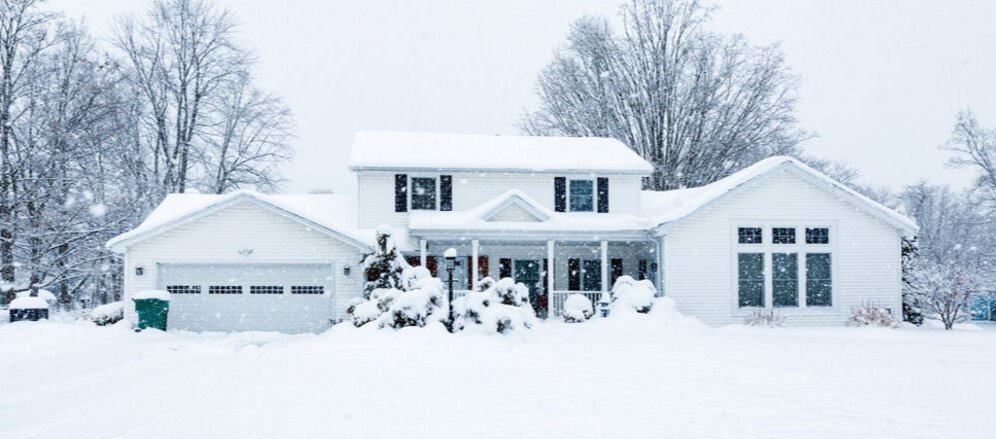
How Much Energy Does a 3-Bedroom Home Use — And How to Cut Your Winter Bills
Your electricity bill is likely the single largest contributor to your monthly household expenses — and in a 3-bedroom home, that bill can genuinely surprise people who have never broken it down properly. The good news is that once you understand where the power is going, cutting it becomes a much more targeted exercise than turning off lights and hoping for the best.
Our electricians at Kato Electrical help homeowners across Vancouver understand and reduce their electricity consumption — through better appliances, smarter controls, and finding the places where energy is quietly leaking out of a home. This guide covers the numbers, the calculation method, and the practical steps that actually move the needle on a winter bill.
How Much Energy Do Appliances Use?
A typical 3-bedroom home in British Columbia is classified as a medium energy usage household, consuming around 3,100 kWh of electricity per month across all appliances and systems. That number rises significantly in winter — but understanding the breakdown by appliance category shows you exactly where to focus.
The distribution is more lopsided than most people expect. (If you have been carefully unplugging your phone charger to save energy, this chart is going to be a bit of a moment.)
Heating and cooling alone account for nearly half your electricity bill. Water heating and laundry together add another 27%. That three categories — 74% of your total consumption — are the only ones worth targeting if your goal is meaningful savings. Switching off standby devices and replacing lightbulbs with LEDs are worthwhile habits, but they move the needle at the margin. Insulation, thermostat management, and appliance upgrades move it significantly. Ask us about energy-efficient upgrades →
How to Calculate Your Home's Energy Usage

You do not need to call an electrician to calculate your approximate energy consumption — though if the number you arrive at does not match your bill, that conversation is worth having. Here is the method:
-
1
List all your appliances and find their wattage
Check the label on each device — it will show the rated wattage (W) or power consumption. For appliances without a clear label, most manufacturers publish this information in the product manual or on their website. Common examples: a standard electric kettle runs at 1,800–2,400W; a refrigerator at 150–400W; a laptop at 45–65W. -
2
Estimate daily usage hours for each appliance
How many hours per day do you actually use each device? A television might run 4 hours per day on average; a washing machine might run 1 hour on the two days a week you do laundry. Be honest — overestimating usage is better than underestimating it if you are trying to diagnose a high bill. -
3
Multiply wattage by daily hours, then divide by 1,000
This gives you the daily kWh (kilowatt-hours) consumption for that appliance. Example: a 2,000W electric heater running 6 hours per day = 2,000 × 6 = 12,000 Wh ÷ 1,000 = 12 kWh per day. -
4
Multiply by 30 for monthly consumption
12 kWh per day × 30 days = 360 kWh per month for that one heater. Add up all appliances for your total monthly household kWh, then multiply by your electricity rate per kWh to estimate your bill. BC Hydro's current residential rates are listed on their website →
BC Hydro's My Hydro portal provides a detailed breakdown of your household's consumption history, compared against similar-sized homes in your area, and with seasonal patterns clearly shown. It is usually more accurate than manual calculations and takes 2 minutes to check. If your consumption is significantly higher than comparable homes, that discrepancy is worth investigating. Call us: (604) 239-3084
Does Energy Consumption Increase in Winter?

Yes — and for reasons that stack on top of each other rather than operating independently. Here is what is happening to your bill between November and March:
🌡️ Heating runs longer and harder — particularly in homes with older insulation or air leaks
🌙 Shorter days mean more lighting hours — sunset at 4:30pm in December adds hours of artificial light to every day
🏠 More time indoors — more TV, more cooking, more appliance use across the board
🚿 More hot water consumption — longer showers, more dishes, more laundry in warm cycles
💨 Air leaks force heating to work harder — gaps around windows, doors, and electrical fixtures let heated air escape continuously
If your winter bill seems unusually high even by these standards, the meter is worth checking. Look at how quickly your meter reading changes over a fixed time period when you know all major appliances are off. If it is still moving significantly, there may be a circuit drawing power that should not be — and that is a conversation to have with a licensed electrician. Call us: (604) 239-3084
↑ Back to topEight Ways to Cut Your Winter Electricity Bill
These are ordered roughly by impact — the top items move the bill more than the bottom ones, though all are worth doing.
Heat Your Home Naturally During the Day
Open curtains on south-facing windows during daylight hours to let solar gain do some of the heating for free. In the evening, close insulated curtains to trap that warmth. It is the oldest trick in the book — and it still works. (The sun has been doing this for free for approximately 4.6 billion years. May as well take advantage.)
Stop Using Lights During the Day
Draw your curtains and use natural light during daylight hours. Artificial lighting during the day in a home with adequate windows is pure waste — it contributes to the bill without contributing to your comfort. LED lighting for the hours when you actually need it makes this easier. Our LED retrofit service →
Switch to Energy Star Appliances
Energy Star certified appliances use around 25% less energy than standard models. When renovating or replacing an appliance, the Energy Star label is the most reliable efficiency benchmark available. Natural Resources Canada's Energy Star program lists qualifying products and the rebates available through BC Hydro's PowerSmart rebate program →
Cut Down on Laundry Frequency and Temperature
Small, frequent loads are inefficient — a half-full washing machine uses nearly as much energy as a full one. Consolidate laundry to one or two full loads per week. Washing with cold water instead of warm cuts the energy cost of each load significantly, since most of a washing machine's energy goes into heating the water rather than actually washing the clothes.
Lower the Thermostat by One Degree
Reducing your thermostat setting by a single degree can cut your heating costs by 3–5%. Multiple degrees make a proportionally larger difference. A programmable or smart thermostat can do this automatically — lower overnight and while the house is empty, warmer when it needs to be. Our smart thermostat installation service →
Stop Heating Empty Rooms
A spare bedroom with the door left open is a room you are paying to heat. Close the doors of unoccupied rooms, seal their vents, and shut any windows. The heat you generate stays in the spaces where people actually are. It sounds obvious — most energy-saving measures do, once someone says them out loud.
Seal Air Leaks Around Windows, Doors, and Fixtures
Air leaks are the silent tax on every heating bill. A home with gaps around door frames, window seals, and electrical outlets is constantly losing warm air and drawing in cold air — forcing the heating system to run longer to maintain temperature. An electrician can seal gaps around electrical fixtures; a contractor handles windows and doors. Check the basement and attic first — the most significant leaks are usually there. Contact us about electrical air sealing →
Reverse Your Ceiling Fans
Most ceiling fans have a reverse setting — a switch on the motor housing that makes the blades turn clockwise instead of counterclockwise. In this direction, the fan creates an updraft that pushes the warm air that has collected near the ceiling back down into the room. Warm air rises — your fan can push it back down. Running a ceiling fan on low uses far less energy than raising the thermostat to compensate for heat stratification. Our fan installation service →
Related services from our team:
Related reading: Why LED Lighting Upgrades Are Worth the Switch | Slash Your Lighting Costs by Up to 70% with BC Hydro Rebates | Is Your Home's Electrical System Ready for a Heat Pump? | Efficient Heating Solutions: Electrical Heat Pumps and Smart Thermostats
↑ Back to topWant to Reduce Your Energy Bills in Vancouver?
Our licensed electricians can assess your home's electrical system, recommend energy-efficient upgrades, and install smart controls — with upfront pricing and BC Hydro rebate guidance included.
Serving All of Greater Vancouver
Common questions about home energy usage and electricity bills — answered by our licensed Vancouver electricians.