
How to Replace an Electrical Outlet?
Warm outlets, burn marks, crackling sounds, or sparks — these are not quirks to live with. They are fire hazards in progress. Call Kato Electrical: (604) 239-3084 — stop using that outlet now and get it assessed today.
When to Replace an Electrical Outlet, Which Type to Choose, and How to Do It Right
Electrical outlets are probably the most-used components in your entire home — and the most ignored right up until the moment one stops working properly. A plug that falls out, a socket that sparks, or an outlet that feels warm to the touch are all trying to get your attention. The question is whether you deal with it before something goes wrong, or after.
At Kato Electrical, we replace and upgrade outlets across Vancouver and the Lower Mainland regularly. This guide gives you the honest breakdown: when to replace, when to stop what you're doing and call us instead, which outlet type to choose, and how to do a basic swap safely if you decide to handle a straightforward replacement yourself.
When and Why Should You Replace an Electrical Outlet?

The most common reason people notice an outlet needs replacing is that plugs stop staying in — they fit loosely, slide out, or have to be held at an angle to maintain contact. This happens because the metal contacts inside the outlet wear and deform over years of use. It is a mechanical degradation problem, not an electrical emergency — but it is still worth fixing, because a loose connection generates heat and resistance.
Here are the full range of reasons to replace an outlet — ordered by urgency:
-
The outlet feels warm or hot
Stop using it immediately. An outlet that is noticeably warm — and especially one that is hot — has more resistance in its connections than it should. This is either a failing outlet, loose wiring behind it, or a circuit issue. Burn marks or discolouration around the socket face confirm the problem has been developing for a while. This is a fire risk. Call us: (604) 239-3084 -
Sparks, crackling sounds, or burning smell
Visible sparks or audible crackling when plugging in an appliance are not normal and should not be dismissed as a quirk. The crackling is the sound of arcing — current jumping between contact points rather than flowing cleanly through them. A burning smell confirms heat damage. Unplug whatever is in the outlet, stop using it, and have it assessed. (An outlet that crackles is essentially asking to be replaced. Politely, but urgently.) -
Plugs fit loosely or fall out
As described above — mechanical wear on the internal contacts. Less immediately dangerous than the above two, but still worth addressing. A loose connection generates resistance and heat over time, even if there are no visible symptoms yet. -
The outlet is old or part of an un-renovated electrical system
Old outlets degrade over time even when they appear to function. Their internal components may have loose connections or degraded contacts that are not visible from the outside but create increasing resistance under load. In older homes, aging outlets are often accompanied by wiring that has not been inspected in decades — making a full assessment worthwhile when any replacement is done. -
The outlet is ungrounded (two-pin only)
Two-pin outlets are ungrounded — they lack the third connection that directs fault current safely away from appliances and people. Using a two-to-three pin adapter to plug in three-pronged appliances does not fix this; it just adds a plug that fits. The outlet is still ungrounded. Ungrounded outlets are a code issue and a safety issue. This requires not just a new outlet but a proper grounding assessment by a licensed electrician. Technical Safety BC requires proper grounding for all circuits. -
Physical damage — cracks, chips, or a broken faceplate
A cracked faceplate is not just cosmetic. It allows dust and debris to enter the outlet housing and potentially contact live components. If you can see inside the outlet through a crack, replace the faceplate at minimum — or the whole outlet if damage goes deeper. -
You have just bought a large new appliance
Adding a high-draw appliance — an air conditioner, a heavy kitchen appliance, an EV charger — to a circuit that was not designed for it often means upgrading the outlet and potentially the circuit. A 15A outlet feeding a 20A appliance is an overload waiting to happen.
The most common thing we find when we open a box to replace a "just worn out" outlet is wiring that needed attention years ago. Loose connections on the terminal screws, wire insulation that has degraded from heat over time, or aluminium wiring connections that were never properly treated. Replacing the outlet itself is straightforward. What is behind it sometimes is not. That is why we always inspect the wiring condition when we replace an outlet — not just the outlet itself. Book an outlet replacement →
Types of Electrical Outlets — Which One Do You Need?
Choosing the right replacement outlet matters more than most people expect. Here is a straightforward breakdown of the main types and where each one belongs.
15A, 120V Outlet
The most common outlet in residential settings. Suitable for lighting, general electronics, and small appliances. Available in two-prong (ungrounded, older) and three-prong (grounded, current standard) versions. Best for living rooms, bedrooms, and hallways.
20A, 125V Outlet
Provides higher current capacity and is better suited for kitchens, laundry rooms, and anywhere high-draw appliances like microwaves, washing machines, or space heaters will be used. Has a distinctive T-shaped slot to accept 20A plugs while remaining backwards-compatible with 15A plugs.
20A, 250V Outlet
Designed for large appliances — air conditioners, refrigerators, and electric ranges. Requires a double-pole circuit breaker in the main panel and should only be installed by a licensed electrician. These are not like-for-like swaps with standard outlets.
Tamper-Resistant Receptacles
Feature spring-loaded shutters that only open when both slots are pressed simultaneously — preventing children from inserting objects into individual slots. Required by the Canadian Electrical Code in new construction and recommended in any home with young children. A direct swap for standard outlets.
GFCI Outlets
Ground Fault Circuit Interrupters monitor current flow and trip almost instantly if they detect a ground fault. Required by BC Electrical Code in bathrooms, kitchens, garages, outdoor areas, laundry rooms, and crawl spaces. The test and reset buttons on the face are the giveaway. Our GFCI installation service →
Switched Outlets
Standard outlet with a built-in light switch — lets you cut power to a plugged-in device without removing the plug. Useful for appliances that are awkward to reach behind (entertainment systems, floor lamps) and a direct replacement for standard outlets.
USB Outlets
Combine a standard power socket with one or more USB-A or USB-C ports. Eliminates the need for wall adapters for phones and tablets. Available in versions with fast-charging USB-C ports. A direct swap for standard outlets in the same box location. Particularly popular in bedrooms and home offices.
Smart Outlets
Wi-Fi-connected outlets that can be controlled, scheduled, and monitored remotely through a smartphone app or home automation system. Track energy consumption by device, set schedules, and automate appliance control. A direct swap for standard outlets with the same wiring — provided your home has reliable Wi-Fi coverage at the outlet location.
Steps to Replace a Power Outlet in Your Home

A like-for-like outlet swap in a properly grounded system is manageable for a careful homeowner. But stop and call a licensed electrician if: the outlet has burn marks or scorch damage; you find only two wires (ungrounded system); the wiring looks melted, brittle, or discoloured; you are installing a higher-amperage outlet; or you find aluminium wiring. In BC, electrical work may require a permit through Technical Safety BC. When in doubt: call us: (604) 239-3084
-
1
Turn the power off at the circuit breaker
Identify which breaker controls the room where the outlet is located and flip it off. If you are unsure, turn off the main breaker. Do not skip this step on the basis of being careful with the wires — electricity does not give warnings. -
2
Test for zero voltage
Use a non-contact voltage tester at each slot of the outlet before touching anything. The tester should show no voltage reading. If it does show voltage, the wrong breaker was switched off — go back to the panel. Test again after locating and flipping the correct breaker. -
3
Remove the faceplate and inspect
Unscrew the central screw on the faceplate and remove it. Use your voltage tester again on the exposed wires before touching them. Inspect the inside of the box: look for discolouration, melted insulation, or any sign of heat damage. If you see any, stop here and call an electrician. -
4
Remove the outlet and note the wiring
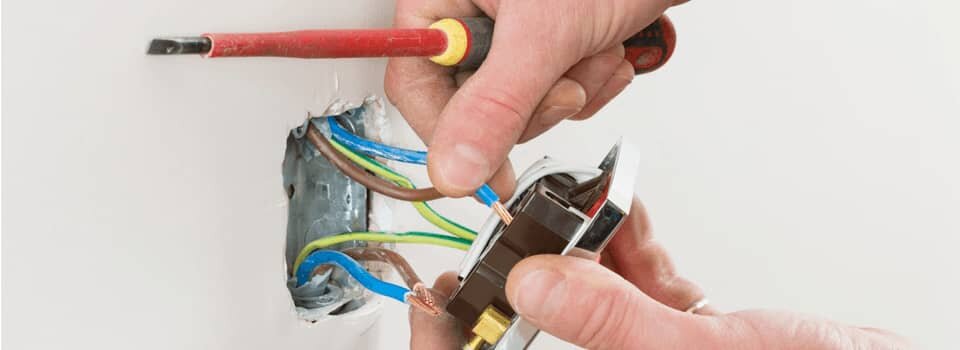
Unscrew the mounting screws holding the receptacle to the electrical box and pull the outlet out gently by its top and bottom corners. Before disconnecting anything, note the wire colours and which terminals they connect to: black (or red) wires connect to brass-coloured terminals (hot), white or blue wires to silver terminals (neutral), and bare or green-coated copper wire to the green grounding screw. -
5
Disconnect the old outlet
Loosen the terminal screws and remove each wire, or use a small flat-head screwdriver to release the backstab connections. Keep the wires organized so you know which is which. Discard the old outlet — it has had its day. -
6
Connect the new outlet
Attach each wire to the correct terminal on the new outlet and tighten the terminal screws securely. Loose connections are the cause of most outlet problems — do not leave any wire less than fully secured. Attach the grounding wire to the green screw. Do not use the backstab holes on the back of the outlet — screw terminals are more reliable. -
7
Push the outlet into the box and secure it
Fold the wires neatly into the electrical box — do not force them — and push the outlet into position. Secure the mounting screws and confirm the outlet sits flush and level. Attach the faceplate. -
8
Restore power and test
Flip the circuit breaker back on. Test the new outlet with your voltage tester to confirm it is receiving power. Plug in a lamp or phone charger to verify it works correctly. A correctly installed outlet should feel solid, with no looseness in the socket, and no warmth after a few minutes of use.
When you have a wall open for an outlet replacement, it is a good time to check whether adjacent outlets on the same circuit are in similar condition. Wear and age tend to affect circuits together — if one outlet has worn contacts, the others are probably not far behind. Our electricians often find that replacing one outlet and inspecting the full circuit catches two or three other issues in the same visit. Our electrical troubleshooting service →
When to Call an Electrician Instead
A like-for-like outlet swap in a properly grounded system is manageable. But there are clear situations where calling a licensed electrician is the right call — not just a cautious suggestion.
✗ The outlet or wiring inside the box shows burn marks, scorch damage, or melted insulation
✗ You find only two wires — the system is ungrounded and needs more than an outlet swap
✗ The wiring is aluminium — requires specific connection techniques and materials
✗ You are installing a higher-amperage outlet — may require a new dedicated circuit
✗ You are replacing a 250V outlet for a large appliance — requires panel work
✗ The breaker trips when you restore power after the swap — there is a wiring fault
✗ You are not certain about any part of the process — electrical work done incorrectly creates risks that are invisible until something fails
Call Kato Electrical: (604) 239-3084
Related services from our team:
Related reading: 5 Common Electrical Problems at Home | 10 Overlooked Electrical Mistakes Homeowners Make | All You Need to Know About Breakers
↑ Back to topNeed an Outlet Replaced or Inspected in Vancouver?
Our licensed electricians replace outlets, assess circuit condition, and upgrade to GFCI or smart outlets across the Lower Mainland. Upfront pricing, permits handled, work guaranteed.
Serving All of Greater Vancouver
Common questions about electrical outlets — answered by our licensed Vancouver electricians.