
10 Common Electrical Mistakes That Damage Your Appliances

We've diagnosed these same ten mistakes in homes across Vancouver for years. Most are invisible — until something fails. Call Kato Electrical: (604) 239-3084 if anything on this list sounds familiar.
10 Electrical Mistakes That Ruin Your Appliances — and How to Avoid Every One of Them
We get calls about appliances all the time. The refrigerator that stopped working after two years. The washing machine that keeps tripping the breaker. The dryer that runs fine but never quite finishes the job. Nine times out of ten the homeowner thinks they got a lemon. Nine times out of ten, they didn't.
What we find — in heritage homes in Kitsilano, older apartments in the West End, and plenty of newer builds on the North Shore too — is an electrical system working against the appliances connected to it. Quietly. Continuously. Until something gives.
These are the ten mistakes we see most often in Vancouver. Some are installer errors. Some are homeowner habits. All of them are fixable — usually before any real damage happens, if you know what to look for.
:max_bytes(150000):strip_icc()/SPR-wire-connection-problems-and-solutions-1152877-04_30059-f46e06c464a3465eb9a890a9481a2f6f.jpg)
The scenarioAn older East Van home — the kind where two or three different people have worked the panel over the decades. Inside a junction box, somewhere behind drywall, a wire was never clamped to the box edge. It sits there free, shifting slightly every time someone slams a door or the building settles in the winter cold.
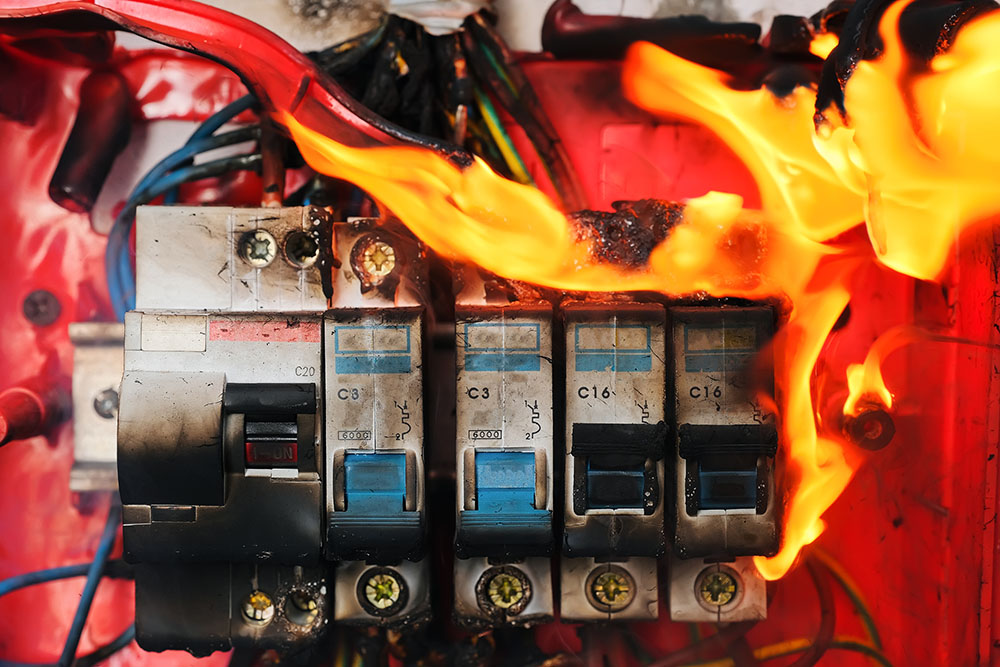
What breaks and whyA wire that isn't secured gradually works loose from its connection point. Once contact becomes intermittent, arcing starts — electricity jumping a small gap instead of flowing cleanly through metal. Arcing generates heat. Heat inside a wall cavity with insulation and old Douglas fir framing is exactly the thing nobody wants. It also causes voltage spikes that, over months, degrade the control boards and motors of whatever's plugged into that circuit.
How often we see itConstantly — and disproportionately in homes that have had additions or DIY renovations. It's the kind of thing a rushed installer skips because securing a wire clamp takes two extra minutes, and it looks perfectly fine on the surface.
The fixProperly clamped connections throughout every junction box, confirmed during a full inspection. Not complicated — just requires actually looking. The cost of a wire clamp is pennies. The cost of finding out via a fire investigation is considerably more.
Thermal imaging is the most reliable way to find unsecured wiring without opening every wall. We pick up heat signatures from arcing connections that look completely fine from the outside. Worth doing in any Vancouver home over 25 years old. Our thermal imaging service →
The scenarioEvery morning you plug in the coffee maker and hear a faint crackle or buzz from the outlet. It's been happening for six months. You've decided it's normal. It isn't.
What breaks and whyWalk through enough Vancouver homes and you stop being surprised by loose outlet connections — they show up everywhere, even in relatively new construction. Terminal screws inside an outlet need to be properly tightened at installation. When they're not, or when they loosen over years of thermal cycling (the slight expansion and contraction every time the circuit heats up and cools down), the wire sits in marginal contact. Marginal contact arcs. Arcing sends voltage spikes directly into whatever's plugged in. Control boards, motor windings, anything with sensitive electronics — they take these spikes poorly. We've pulled apart outlets in older West End apartments and found scorch marks on the wire ends from arcing the homeowner had been hearing for months.
How often we see itProbably the single most common finding on any inspection. Older homes, newer homes — it doesn't much matter.
The fixTighten the terminal screws after confirming that circuit's power is fully off and tested with a voltage meter. If multiple outlets are affected, inspect the whole circuit rather than going one by one.
That buzzing sound isn't your outlet saying good morning. It's arcing. Every occurrence generates heat at the connection. Given enough time and enough crackles, something gives — the outlet, the wire insulation, or the appliance on the other end. (Usually whichever one is most expensive.)

The scenarioThere's an orange extension cord in a lot of Vancouver kitchens and garages right now. It's powering a chest freezer, or a portable air conditioner, or a space heater. It's been there for two years. Nobody thinks about it.
What breaks and whyExtension cords carry a current rating. The wire inside heats up with use — and when you run a heavy appliance through a cord that wasn't sized for sustained high-draw loads, that cord runs hotter than its insulation was designed to handle. Hour after hour, day after day, the insulation degrades from the inside. The cord doesn't blow a breaker. It doesn't make a noise. It just slowly becomes a fire risk sitting on your floor. BC Hydro's energy safety guidance is clear: extension cords are for temporary use, not permanent appliance connections.
How often we see itVery common in older Vancouver suites and apartments where the original outlet count was designed for a different era. Common in garages and workshops too, where appliances accumulate faster than circuits do.
The fixMore outlets — specifically, dedicated circuits for high-draw appliances. A 20A dedicated circuit with a proper outlet is not expensive relative to replacing a freezer full of food or a damaged appliance.
The right question isn't "is this extension cord heavy-duty enough?" It's "why am I permanently running an appliance off an extension cord?" The answer is always the same: not enough outlets. That's what we fix. Outlet and circuit installation →
The scenarioA previous electrician added a circuit, moved a breaker, and cut the wire just barely long enough to reach. Technically it made the connection. Practically, the wire has been under mechanical tension ever since.
What breaks and whyConnections under mechanical stress are more likely to loosen over time. A loose connection in the panel carries the same arcing risk as a loose outlet connection — but with higher current levels. It also makes future work genuinely dangerous. When we open a panel and find wires with no service loop, no room to work, we're being asked to do precision work in a live enclosure with no margin for error. Panel work in BC requires a permit through Technical Safety BC for exactly this reason — this is not the place for shortcuts.
How often we see itMore common than it should be, especially after unlicensed modifications. Panels that have been added to piecemeal over the decades are the worst offenders.
The fixA full panel assessment, and where necessary, a proper upgrade with correctly sized wire runs and adequate service loops throughout. Our panel upgrade service →
We've opened panels where literally every single wire was cut right to the edge of its terminal. Whoever did it was either in a tremendous hurry or didn't know the standard. Either way, it compounds with every passing year.
The scenarioA homeowner in a 1972 North Shore home wants to add an outlet. Someone — not a licensed electrician — taps into an existing circuit and runs new copper wire. Problem: the existing circuit is aluminium.
What breaks and whyWire gauge and material are matched to the circuit they serve. A 15A circuit uses 14-gauge wire; a 20A circuit uses 12-gauge copper. Mix gauges within a circuit and the thinner wire becomes a bottleneck — carrying more current than it was rated for. Aluminium and copper mixed without proper connectors is a separate and more serious problem: the two metals expand and contract at different rates, which causes connections to loosen and arc over time. The Canadian Standards Association (CSA) has specific standards for aluminium wiring connections because this combination has caused residential fires when installed incorrectly.
How often we see itAluminium branch circuit wiring is present in a significant number of Lower Mainland homes built between 1965 and 1976 — East Van, South Van, older North Shore properties. Any home from that era that's had electrical work done without a licensed electrician is a candidate for improper mixed-metal connections.
The fixAssessment first, then either proper aluminium-rated co-wiring connections throughout, or a full rewire depending on the scope and condition of the existing wiring. Our aluminium rewiring service →
If your home was built in the late 1960s or early 1970s and you've never had a wiring assessment, get one. Not because something will definitely fail tomorrow — but because knowing the state of your wiring is worth considerably more than the cost of finding out the hard way.
We'll assess your wiring, panel, and outlets and give you a clear picture of what needs attention — no obligation. Older Vancouver homes especially benefit from knowing where they stand. Book a free inspection → or call (604) 239-3084
The scenarioYou move into an older West End apartment. Three-slot outlets throughout — they look grounded. A circuit tester tells a different story: half of them show "open ground." The round hole at the top is decorative.
What breaks and whyAn outlet that looks grounded but isn't provides none of the protection a ground is supposed to offer. Without a proper ground path, fault current has nowhere safe to go — so it travels through appliance casings, plumbing, and anyone in contact with them. More relevant for appliance longevity: BC Hydro grid events regularly produce power surges on restoration, and without a ground path those surges run straight through whatever appliance is plugged in. We've seen surge damage from restoration spikes wipe out expensive appliances in homes where the outlets looked completely fine.
How often we see itVery common in older Vancouver apartments and suites — buildings where three-slot outlets were installed for cosmetic reasons without running the grounding conductor to match.
The fixTest every outlet with a proper circuit tester. Where grounding conductors are absent, options include running new grounding wire or installing GFCI outlets (which provide shock protection without a ground, and can be labelled "GFCI Protected — No Equipment Ground" per BC Electrical Code). Circuit protection services →
We find ungrounded three-slot outlets in roughly half the older Vancouver homes we inspect. It's genuinely common, genuinely fixable, and genuinely worth addressing before the next significant power event in your neighbourhood.
The scenarioA Burnaby home with an updated kitchen — new countertops, new appliances. Nobody upgraded the outlets. No GFCI in the kitchen or bathroom. No AFCI breakers in the panel. The renovation added granite and stainless. The electrical safety was left exactly as it was in 1988.
What breaks (or who gets hurt) and whyGFCI and AFCI address different hazards. GFCI monitors current balance and trips almost instantly when current starts leaving through an unintended path — through water, through a person. Required by BC Electrical Code in bathrooms, kitchens, garages, crawl spaces, and outdoor outlets. AFCI detects the electrical arcing signature from loose or damaged connections and trips before that arcing ignites surrounding material. Required in bedrooms, living areas, and hallways under current BC Electrical Code. Most Vancouver homes built before 2000 have neither. The technology has improved significantly — combination AFCI/GFCI breakers now handle both in a single device.
How often we see itConstantly. AFCI protection in particular is almost entirely absent in pre-2000 homes, and it's the one that stops electrical fires from starting inside walls where nobody can see them.
The fixGFCI outlets in all required locations; AFCI breakers in the panel for bedroom and living area circuits. We carry both on every truck and install them across the Lower Mainland. GFCI and AFCI services →
Most people know what a GFCI outlet is — the one with the test and reset buttons. AFCI is the one most people haven't heard of, and it's the one that prevents house fires. If your panel was installed before 2003 and has never been upgraded, there's a good chance you have zero AFCI protection anywhere in the building.
The scenarioA breaker keeps tripping. The homeowner resets it a few times, decides to investigate, opens the panel. They find one breaker that looks different — slightly discoloured, older than the others. Figures they can swap it. Doesn't seem complicated.
What breaks (and who gets hurt) and whyThe panel is the one place in the home where the risk changes dramatically. The main bus bars inside remain live even when individual breakers are switched off — the only way to de-energise them is at the utility meter, which in BC requires coordination through Technical Safety BC. Working in an energised panel without proper training and protective equipment is how serious injuries happen. A breaker that keeps tripping is also the panel's way of telling you something about the circuit — an overload, a fault, an undersized panel — that won't be resolved by swapping the breaker.
How often we see itWe've arrived at homes after DIY panel work more times than we'd like. The damage range goes from "nothing happened, got lucky" to "the whole panel needs replacing now."
The fixCall a licensed electrician when a breaker keeps tripping. The diagnostic takes less time than most people expect. Panel assessment and upgrade →
We're not trying to protect our market share here. The panel genuinely is the one place in your home where the margin for error is very small and the consequences of getting it wrong are very large. This is worth the phone call.
The scenarioA Vancouver home that's been renovated in stages over 30 years. A kitchen circuit here, an EV charger last spring, an addition in 2015. Every project added circuits. Nobody replaced the panel. It's now completely full — every slot occupied, wires running over each other in a space that was designed for half as many.
What breaks and whyWires generate heat when current flows. In a properly designed panel with adequate spacing, that heat dissipates. In an overstuffed panel, it accumulates — degrading insulation, stressing breakers, increasing the chance of a fire starting inside the enclosure. Breakers under sustained thermal stress also become unreliable: they start tripping at loads they should handle, or — worse — fail to trip when they genuinely should. And because there's no room left, whatever electrical need comes next gets shoehorned in with tandem breakers or other workarounds that compound the problem year on year.
How often we see itIncredibly common in older Vancouver homes upgraded piecemeal over the decades. A 100A panel from 1972 was not designed to serve modern household loads — induction cooktops, EV charging, heat pumps, and all the rest.
The fixA panel upgrade, properly sized for current and anticipated future load, with spare capacity deliberately built in. A panel that leaves the electrician's hands completely full is already undersized. We plan our upgrades with room to grow.
The most common thing homeowners tell us after a panel upgrade is "why did we wait so long?" The process is straightforward, usually comes in under budget expectations, and the house runs noticeably better afterwards. Panel upgrade service →
The scenarioThe kitchen breaker has tripped twice this month. There's a faint burning smell near the dishwasher outlet — faint enough to talk yourself out of it. The microwave sounds slightly different than it used to. You've got a lot going on. You'll deal with it later.
What breaks and whyThis is the mistake that lets all nine of the others compound. A tripping breaker is your electrical system's most direct communication — it's saying the circuit is overloaded, something is drawing too much current, or there's a fault on the line. A burning smell near an outlet is more urgent than that: it's insulation breaking down, which is the early stage of an electrical fire. (There is no version of "faint burning smell near the outlet" that resolves itself without someone doing something about it.)
How often we see itAll the time. And the longer the wait, the more expensive the fix. What starts as a $200 outlet repair becomes a $2,000 panel job when the downstream consequences have been accumulating for long enough.
The fixAnnual inspections — or at minimum, calling a licensed electrician when you notice something. Early intervention is almost always cheaper, quicker, and simpler than waiting for a symptom to become a failure.
We've heard it many times: "I didn't want to bother anyone over something that might be nothing." An electrical issue that nags at you is worth a call. We'd much rather tell you it's nothing than respond after something's failed. Call us: (604) 239-3084
Related services:
We've fixed all ten of these across the Lower Mainland — heritage homes, older apartments, newer builds. Give us a call or book online. We'll give you an honest assessment of what needs attention and what can wait.
We serve all of Greater Vancouver:
Questions we hear regularly on service calls and inspections across Vancouver.