
Electrical Transformer- All You Need to Know
Burning smell near electrical equipment? Sudden power loss across an area? Don't wait. Call Kato Electrical: (604) 239-3084 — transformer problems do not improve with time.
What Is an Electrical Transformer? How It Works, Why It Fails, and What to Do About It
Transformers are one of those things that power everything you use but never get thought about until they stop working. They sit at the top of utility poles, inside industrial equipment, and at the back of every power adapter plugged into your wall. The electrical grid as we know it would not function without them — and yet most homeowners could not describe what one does if asked.
This guide covers what electrical transformers actually do, the types you are most likely to encounter, why they fail, and what the right response is when one does. If you have specific transformer questions related to your property's electrical system, our team at Kato Electrical is available to advise — call us at (604) 239-3084.
What Is an Electrical Transformer?
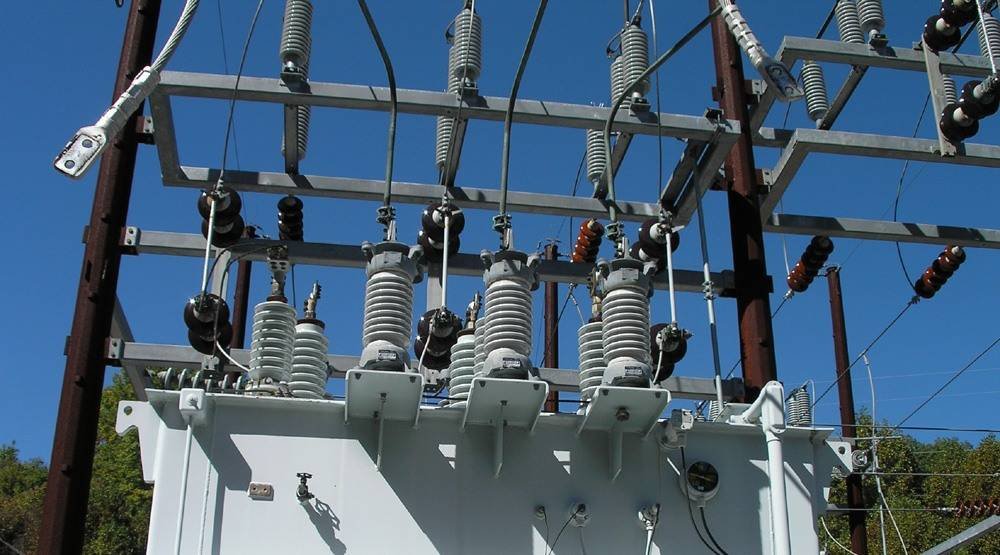
An electrical transformer is a device that transfers AC (alternating current) electrical power from one circuit to another, changing the voltage level in the process while keeping the frequency the same. It does this without any direct electrical connection between the two circuits — using electromagnetic induction instead.
The principle behind this is that a changing magnetic field in one coil of wire will induce a voltage in a nearby coil of wire, even without physical contact between them. A transformer takes advantage of this by placing two wire coil windings — called the primary and secondary windings — around a shared magnetic core. Current in the primary winding creates a changing magnetic flux in the core. That flux induces a corresponding voltage in the secondary winding. The ratio of turns between the two windings determines whether the voltage goes up or down.
Electrical power is most efficiently transmitted over long distances at very high voltages. But high-voltage power is not safe or practical for homes and businesses. Transformers step voltage up for long-distance transmission from power stations, then step it back down for the neighbourhoods and buildings it enters. Without transformers, electricity generation and distribution as we know it would be functionally impossible. (They are, in a very real sense, the unsung infrastructure holding the entire grid together. The fact that most people have never thought about them is almost a compliment to how reliably they work.)
How Does an Electrical Transformer Work?

The operation of a transformer follows a clear sequence — understanding each stage makes the whole system easier to follow:
Primary Winding
Connected to the power source. Takes in AC electricity and creates a changing magnetic flux in the core. This is the input side of the transformer.
Magnetic Core
Links the two windings magnetically without electrical contact. Channels and concentrates the magnetic flux generated by the primary winding through to the secondary winding.
Secondary Winding
Receives the induced voltage from the magnetic flux. Delivers power to the load circuit. The number of turns relative to the primary winding determines whether voltage is stepped up or down.
Electromagnetic Force (EMF)
The voltage induced in the secondary winding. The EMF value — and therefore the output voltage — is determined by the turns ratio between primary and secondary windings.
The key practical points: a transformer only works with alternating current — the changing direction of AC is what produces the changing magnetic flux that makes induction possible. Direct current (DC) does not change direction, produces no changing flux, and therefore produces no induction. A DC power source connected to a transformer achieves nothing, which is why much of our modern power grid infrastructure runs on AC.
The transformers that homeowners typically interact with directly are distribution transformers — the cylindrical units on utility poles that step neighborhood-level distribution voltage down to the 120V/240V that enters your home's main panel. If the transformer serving your street fails, it causes a localized outage for the properties it serves. This is reported to BC Hydro's outage reporting line rather than an electrician — but if your home's electrical system is damaged as a result of the failure, call us. (604) 239-3084
Types of Electrical Transformers
| Type | Function | Typical Application |
|---|---|---|
| Power Transformer | Steps up generator output voltage to transmission system levels | Power stations connecting to high-voltage transmission grid |
| Distribution Transformer | Steps voltage down from distribution levels to residential/commercial service voltage | Utility poles serving homes and buildings — the cylindrical units on the pole outside |
| Autotransformer | Uses a single winding for both input and output; steps voltage up or down between AC networks of different voltages | Inter-tie transmission between AC systems operating at different voltages |
| Generator Step-Up Transformer | Raises generator output to the highest voltage for long-distance transmission | Power generation facilities; operates continuously at near full load |
| Isolation Transformer | Transfers power while electrically isolating input from output circuits | Medical equipment, sensitive electronics, safety-critical circuits |
What Causes an Electrical Transformer to Fail?
Transformers are built to last — utility-grade distribution transformers have service lives measured in decades under normal conditions. When they fail, it is typically for one of a handful of specific reasons:
-
Power surges and line surges
This is the most common cause of transformer failure. A large and sudden spike in electrical current exceeds the transformer's designed capacity, overwhelming the insulation and internal components. Line surges from the utility grid — caused by switching operations, faults on the transmission system, or other large loads connecting and disconnecting — can cause transformer failures with very little warning. Surge protection for your home's electrical system → -
Lightning strikes
A direct or nearby lightning strike delivers an enormous voltage spike to the electrical system. Even with lightning arresters in place, a particularly close or direct strike can overwhelm protection systems and cause transformer failure. The resulting failure is typically fast, visible, and loud. -
Overloading and heat accumulation
Transformers contain mineral oil that dissipates the heat generated by normal operation. When a transformer is consistently overloaded — asked to supply more power than it was rated for — the internal temperature rises beyond what the oil can manage. The wiring insulation breaks down, and the transformer eventually fails. This process can take days, weeks, or months depending on the severity of the overload. -
Wear and age
Like all electrical equipment, transformers degrade with age. Insulation dries out and becomes brittle, connections loosen, and oil degrades over decades of thermal cycling. An aging transformer showing signs of degradation — reduced capacity, unusual sounds, or detectable heat under normal load — is approaching the end of its service life. -
Moisture ingress
Water entering a transformer — through a compromised seal, flood damage, or condensation in an unprotected installation — dramatically accelerates insulation breakdown and can cause catastrophic failure. Transformers must be protected from moisture, particularly in outdoor or semi-protected locations.
A transformer approaching failure often gives signals before the final event: a faint burning smell near electrical equipment, unusual buzzing or humming sounds at a higher pitch than normal, localized voltage fluctuations on circuits served by a particular transformer, or visible oil staining or discolouration around a transformer housing. If you notice any of these, contact a licensed electrician promptly. Call us: (604) 239-3084
What to Do When a Transformer Fails
A transformer failure can range from a quiet loss of power to a dramatic event with a loud bang and visible smoke. The right response depends on the severity — but the principles are consistent:
✗ Do not approach a transformer that is smoking, on fire, or has just produced a loud bang
✗ Do not attempt to work on a transformer yourself — ever
✓ If there is fire, smoke, or immediate danger: call 911 immediately
✓ For utility transformer failure (street-level): report to BC Hydro's outage and emergency line — they manage the utility infrastructure
✓ For damage to your home's electrical system following a transformer failure: call a licensed electrician once the utility has made the external site safe
✓ Call Kato Electrical: (604) 239-3084
An area-wide power outage following a transformer failure will be restored by BC Hydro — your electrician cannot restore it faster. What your electrician can do is assess any damage that the surge or outage caused to your home's electrical system, panel, or appliances once utility power is restored.
↑ Back to topTransformer Safety — What You Need to Know
Most people will never work on a transformer directly, but understanding the basic safety principles is useful — particularly for anyone in a commercial or industrial setting where transformers may be present in accessible locations.
-
Know the difference between the body and the terminals
The outer housing of a grounded transformer carries no voltage — it is safe to touch under normal conditions. The terminals are a completely different matter. Terminal connections carry live voltage and must never be touched with bare hands or with any conductive tool while the transformer is energized. -
De-energize before any maintenance work
If you are performing any inspection or maintenance that involves opening the transformer housing or working near internal components, the power must be fully off and the transformer verified as de-energized before you touch anything internal. -
Monitor operating temperature and ratings
Keep the transformer operating within its rated capacity. Sustained operation above the rated load leads to thermal degradation — a process that shortens service life and increases failure risk over time. -
Ensure proper grounding
A properly grounded transformer eliminates static electricity buildup and protects the windings from damage. If grounding is uncertain or compromised, have it assessed by a Technical Safety BC licensed electrician before operating the equipment. -
Keep moisture away
Moisture is one of the most damaging environmental factors for transformers. Ensure installations are protected from rainfall, flooding, and persistent condensation. Any evidence of moisture ingress should be addressed immediately. -
Schedule regular inspections
A visual inspection for burning smells, unusual sounds, oil staining, and evidence of overheating should be part of routine maintenance. A licensed electrician can perform a more detailed assessment of transformer condition as part of an annual electrical inspection. Our electrical inspection service →
Factors to Consider When Buying a Transformer

Choosing the wrong transformer for an application causes problems immediately or progressively — either it will not work at all, or it will work but fail prematurely under the load. These are the four factors that determine the right transformer for a given application:
Phase — Single or Three
Single-phase transformers suit most residential and light commercial applications. Three-phase transformers are used for industrial and commercial applications with larger, three-phase loads. A transformer cannot convert between single-phase and three-phase — you must match the transformer to the phase of both your supply and your equipment. Getting this wrong means the equipment does not function.
Load Voltage (Output)
The output voltage of the transformer must match what your equipment requires. This is the voltage that appears on the equipment's nameplate or documentation. Delivering the wrong output voltage will either prevent the equipment from operating or damage it.
Input Voltage (Supply)
The input side of the transformer must match the voltage available from your facility's power supply. Mismatching the input voltage — connecting a 120V transformer to a 240V supply, for instance — will result in immediate failure. Always verify the supply voltage before specifying a transformer.
Size — VA or kVA Rating
Transformer capacity is measured in volt-amperes (VA) or kilovolt-amperes (kVA). To select the right size, calculate the total load requirements of the equipment being powered and add a safety buffer — typically 20–25% above the calculated load. Undersizing a transformer causes overloading and premature failure. Oversizing wastes cost but does not damage anything.
Transformer selection for commercial or industrial applications involves more variables than the four above — power factor, harmonic distortion, installation environment, and regulatory requirements all play a role. If you are specifying a transformer for anything beyond straightforward residential use, get an expert opinion before purchasing. Kato Electrical advises on transformer selection and installation for commercial and residential applications across Vancouver and the Lower Mainland. Call us: (604) 239-3084
Related services from our team:
Related reading: All You Need to Know About Circuit Breakers | 5 Common Electrical Problems at Home | Why Homeowners Are Upgrading Their Electrical Panels
↑ Back to topQuestions About Your Electrical System in Vancouver?
From transformer-related power issues to panel assessments and surge protection — our licensed electricians serve Vancouver and the Lower Mainland. Upfront pricing, permits handled, work guaranteed.
Serving All of Greater Vancouver
Common questions about electrical transformers — answered by our licensed Vancouver electricians.